Makar Sankranti: A Festival of Sunshine, Tradition and New Beginnings
Makar Sankranti is an important Hindu festival celebrated in Nepal and India. It marks the Sun’s transition into Capricorn, known as Makara in Sanskrit. The festival is associated with longer days, seasonal change, gratitude, charity, and fresh beginnings.
In Nepal, this occasion is widely known as Maghe Sankranti. Families gather to enjoy traditional foods, take ritual baths where customary, visit temples, and spend time with loved ones. In India, celebrations vary by region and include names such as Pongal, Uttarayan, and Khichdi.
Makar Sankranti is more than a religious observance. It reflects the close relationship between culture, agriculture, nature, and family life.
When Is Makar Sankranti in 2027?
Makar Sankranti generally falls around January 14 each year, although the exact date can vary slightly according to the calendar and the Sun’s astronomical transition.
In Nepal, Maghe Sankranti falls on the first day of Magh, which usually corresponds to January 14 or 15. For the exact date and any associated religious timings in 2027, check a trusted Nepali calendar closer to the festival.
The day is especially significant because it marks the beginning of the month of Magh, a period traditionally associated with seasonal change and religious observances.
Religious and Cultural Significance of Makar Sankranti
The word Sankranti refers to the Sun’s movement from one zodiac sign to another. Makar Sankranti marks its entry into Makara, or Capricorn.
Many Hindu traditions associate this transition with spiritual merit, prayer, charity, and acts of kindness. Some devotees visit sacred rivers, offer prayers to the Sun, and donate food or clothing to people in need.
The festival also has a seasonal meaning. It arrives during winter, when communities celebrate the harvest, share food, and look forward to warmer days.
In Nepal, the festival is particularly connected with Maghe Sankranti traditions and the beginning of the month of Magh.
How Is Makar Sankranti Celebrated in Nepal?
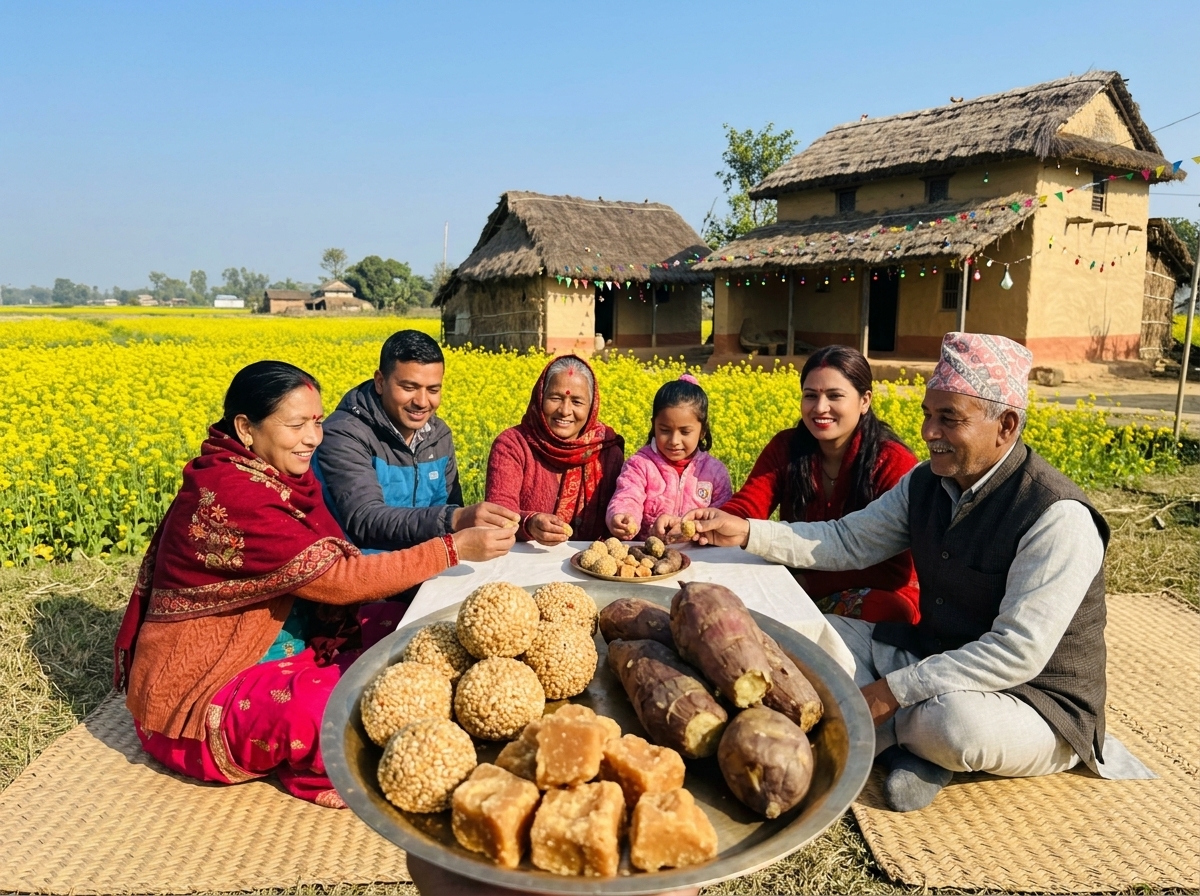
Nepal has a rich variety of customs associated with this festival. Families often prepare special foods and follow traditions passed down through generations.
1. Eating Traditional Foods
Food is one of the most enjoyable parts of Maghe Sankranti. Popular foods include:
- Til ko laddu: Sweet sesame balls.
- Chaku: A traditional molasses-based sweet.
- Ghee: Clarified butter, traditionally eaten with festival foods.
- Yam and sweet potatoes: Seasonal foods commonly enjoyed during the festival.
- Khichdi: A rice-and-lentil dish eaten in some communities.
These foods are part of the cultural tradition, and their preparation can differ between families and regions.
2. Taking Ritual Baths
Many devotees take ritual baths in rivers or other sacred places. In Nepal, religious gatherings may take place at important river confluences and pilgrimage sites.
One well-known example is Devghat, where devotees gather during Maghe Sankranti to pray and observe religious practices.
3. Visiting Temples and Giving Charity
People may visit temples, offer prayers, and donate food, clothing, or other necessities. These practices reflect the festival’s emphasis on generosity and spiritual reflection.
4. Spending Time With Family
For many households, the festival is also an opportunity to prepare traditional meals, meet relatives, and share cultural knowledge with younger generations.
How Is Makar Sankranti Celebrated in India?
The festival takes different forms across India, reflecting the country’s regional cultures and agricultural traditions.
- Pongal in Tamil Nadu: Families prepare a special rice dish with milk and newly harvested rice to express gratitude for the harvest.
- Uttarayan in Gujarat: People fly colourful kites and gather on rooftops with family and friends.
- Maghi in Punjab: Communities celebrate with traditional food, gatherings, and seasonal customs.
- Khichdi traditions in northern India: Many families prepare and share khichdi, while some devotees visit sacred places for religious observances.
These celebrations share common themes of gratitude, generosity, family, and hope for a prosperous year.
Health and Seasonal Importance of Traditional Foods
Sesame seeds, jaggery, yams, and other seasonal foods are common during Makar Sankranti. They provide nutrients and are part of long-standing winter food traditions.
However, traditional foods should be enjoyed in balanced portions. People with specific dietary needs can adapt recipes to suit their preferences and health requirements.
Conclusion
Makar Sankranti is a celebration of faith, seasonal change, cultural diversity, and togetherness. From Nepal’s Maghe Sankranti traditions to India’s colourful regional celebrations, the festival brings people together through food, prayer, and shared customs.
As Makar Sankranti 2027 approaches, take time to learn about your community’s traditions, enjoy seasonal foods, and share the festival’s message of kindness and gratitude.
How does your family celebrate Makar Sankranti or Maghe Sankranti? Share your traditions in the comments, and share this article with friends and family who enjoy learning about festivals.
Frequently Asked Questions (FAQs)
1. When is Makar Sankranti in Nepal in 2027?
Maghe Sankranti is listed for Friday, January 15, 2027, corresponding to Magh 1, 2083 BS, in Nepal’s 2083 public holiday calendar.
2. Why is Makar Sankranti celebrated?
It marks the Sun’s transition into Makara (Capricorn) in the traditional Hindu zodiac and is associated with prayer, charity, seasonal change, and harvest celebrations.
3. What foods are traditionally eaten on Makar Sankranti?
Common foods include sesame sweets, jaggery, khichdi, yams, sweet potatoes, and other regional dishes. Traditions vary by community.