
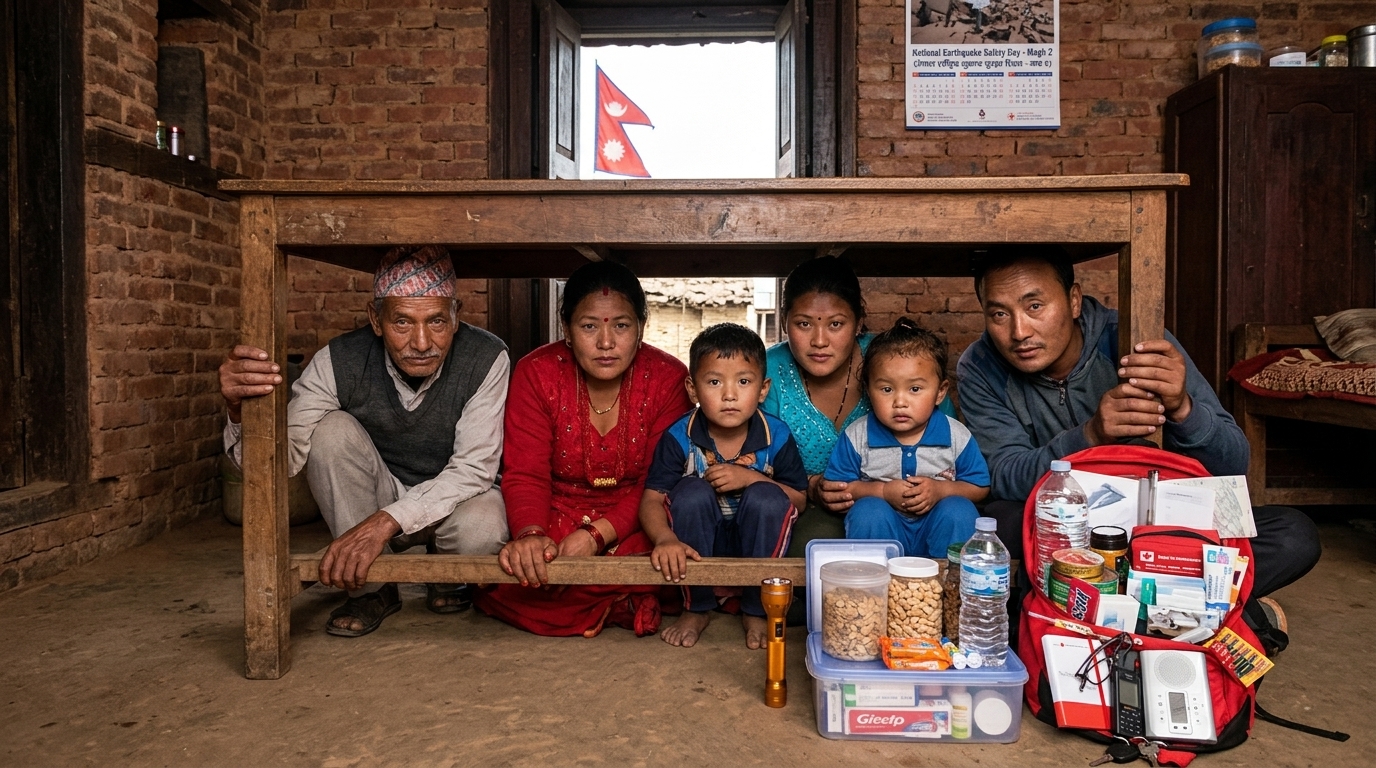
National Earthquake Safety Day: Building a Safer Nepal
Nepal is a beautiful country with mountains, hills, and diverse landscapes. However, its location in an active seismic zone makes earthquakes a serious natural hazard. Earthquakes can damage homes, roads, schools, and hospitals within seconds, putting many lives at risk.
National Earthquake Safety Day is an opportunity to remind people that preparation can save lives. It encourages families, schools, communities, and government agencies to understand earthquake risks and take practical steps before disaster strikes.
Nepal observes earthquake safety awareness activities around Magh 2, remembering the devastating earthquake of 1934 and promoting safer buildings and better disaster preparedness. The observance is commonly associated with earthquake safety awareness and public education.
Why Is Earthquake Safety Important in Nepal?
Nepal lies where the Indian and Eurasian tectonic plates interact. Their movement creates pressure in the Earth’s crust, which can be released as earthquakes.
The earthquake of April 25, 2015, caused widespread destruction across Nepal. It damaged homes, historic monuments, schools, and public infrastructure, while claiming thousands of lives.
This experience showed that earthquake risk is not limited to one district or one type of building. Unsafe construction, heavy furniture, blocked exits, and a lack of emergency planning can increase the danger.
Earthquake safety awareness helps people understand the risks and take action before an emergency occurs.
What Is the Purpose of National Earthquake Safety Day?
The main purpose of National Earthquake Safety Day is to build a culture of preparedness. It reminds people that earthquakes cannot be prevented, but many injuries and losses can be reduced through planning and safer construction.
Important objectives include:
- Raising public awareness about earthquake risks.
- Promoting earthquake-resistant construction and compliance with building codes.
- Teaching emergency response skills to students and communities.
- Encouraging family emergency plans and disaster supply kits.
- Supporting community preparedness through drills and public education.
Essential Earthquake Safety Tips Everyone Should Know
1. Before an Earthquake
Preparation is one of the most effective ways to protect yourself and your family.
- Secure heavy cupboards, shelves, televisions, and other furniture.
- Identify safe places away from windows and objects that could fall.
- Keep emergency exits clear.
- Prepare an emergency bag with drinking water, basic food, a torch, a first-aid kit, essential medicines, and a battery-powered radio.
- Keep copies of important documents and emergency contact details in a safe place.
- Check whether your home or workplace follows appropriate earthquake-resistant building standards.
Families should also decide how they will contact one another if phone networks become unavailable.
2. During an Earthquake
If you are indoors when shaking begins, remember Drop, Cover, and Hold On.
- Drop to your hands and knees so you are less likely to fall.
- Cover your head and neck under a sturdy table or desk if possible.
- Hold On to your shelter until the shaking stops.
Stay away from windows, glass, and heavy objects that could fall. Do not rush toward stairways or elevators while the building is shaking.
If you are outside, move to an open area away from buildings, walls, trees, and power lines. If you are driving, pull over safely away from bridges and overhead hazards and remain inside the vehicle until shaking stops.
3. After an Earthquake
When the shaking stops, remain alert. Aftershocks may follow the main earthquake.
- Check yourself and others for injuries.
- Leave a damaged building carefully if it is safe to do so.
- Avoid damaged walls, exposed electrical wires, and gas leaks.
- Do not enter damaged buildings until authorities say it is safe.
- Listen to official instructions and use phone networks only when necessary.
- Help children, older adults, people with disabilities, and injured neighbours when you can do so safely.
Never use an open flame if you suspect a gas leak. Move away from the area and contact the appropriate emergency service.
How Is National Earthquake Safety Day Observed?
Every year, Nepal marks National Earthquake Safety Day on Magh 2, remembering the devastating 1934 Nepal–Bihar earthquake. The government began observing the day in 1999 to encourage earthquake awareness and risk reduction.
Activities may include:
- Public awareness rallies and educational campaigns.
- Earthquake safety exhibitions and demonstrations.
- School safety sessions and emergency drills.
- Discussions about safe buildings and disaster preparedness.
- Community programmes focused on reducing earthquake risks.
These activities remind people that earthquake preparedness is a shared responsibility of government agencies, builders, families, schools, and local communities.
Conclusion
National Earthquake Safety Day is a reminder that preparedness can save lives. Nepal cannot prevent earthquakes, but safer buildings, emergency plans, public awareness, and practical safety skills can reduce their impact.
Do not wait for the next earthquake to prepare. Secure heavy furniture, make an emergency kit, discuss a family plan, and learn how to respond safely.
What earthquake safety measures have you taken at home or at school? Share your thoughts in the comments, and share this article to help more people learn how to stay safe.
Frequently Asked Questions (FAQs)
1. When is National Earthquake Safety Day observed in Nepal?
It is observed every year on Magh 2 of the Nepali calendar. The corresponding Gregorian date generally falls around January 15 or 16.
2. Why does Nepal observe National Earthquake Safety Day?
Nepal observes the day to commemorate the 1934 Nepal–Bihar earthquake and raise awareness about earthquake preparedness, safer construction, and disaster risk reduction.
3. What should I do during an earthquake?
If you are indoors, Drop, Cover, and Hold On: get low, protect your head and neck under sturdy furniture if possible, and hold on until the shaking stops. Stay away from windows and objects that may fall.