
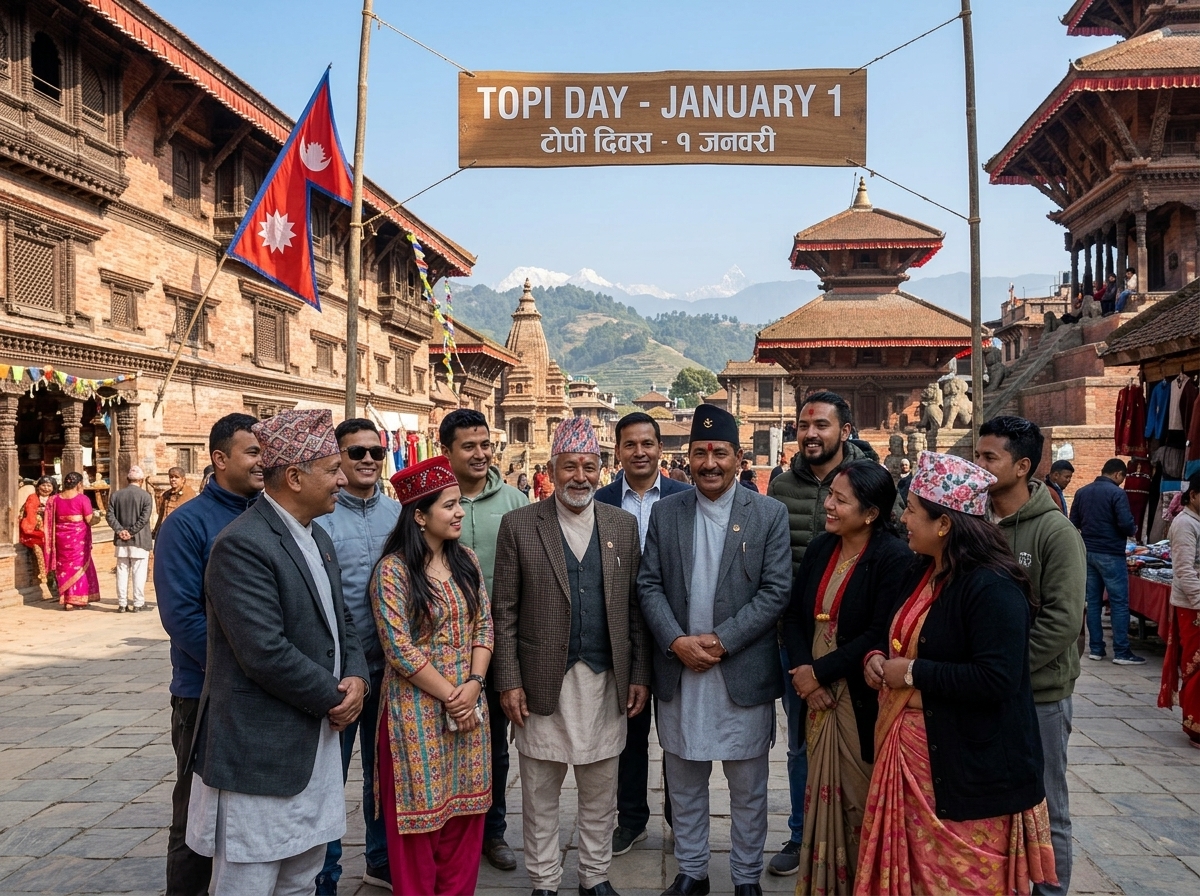
Topi Day: Celebrating Nepal’s Cultural Identity
Nepal is a country rich in culture, traditions, languages, and ethnic diversity. From traditional festivals to unique clothing, every cultural symbol tells a story about the country’s identity. One such symbol is the Nepali topi, a traditional cap that represents pride and cultural heritage for many Nepalis.
Topi Day is celebrated every year on January 1. On this day, people wear traditional Nepali caps, share photographs in cultural attire, and encourage younger generations to appreciate Nepal’s heritage. The celebration also gives the English New Year a distinctly Nepali cultural touch.
When Is Topi Day 2027 in Nepal?
Topi Day 2027 will be celebrated on Friday, January 1, 2027.
The day is also associated with National Dress Day, when people promote traditional clothing such as daura-suruwal, Dhaka topi, and gunyu-cholo. The celebration encourages people to value their cultural roots while welcoming the New Year.
According to Radio Nepal, the campaign began in 2013 to encourage young people to embrace traditional Nepali attire. Read the report from Radio Nepal.
History of Topi Day in Nepal
Topi Day developed as a cultural campaign led by Nepali youths who wanted to preserve traditional dress and strengthen national identity. The organizers chose January 1 because many people already celebrate the English New Year on this date.
The campaign encouraged people to wear traditional caps and national dress instead of allowing the occasion to pass without a connection to Nepali culture.
Over the years, social media posts, public gatherings, rallies, and cultural programmes have helped spread awareness about the day. However, Topi Day is best understood as a community-driven observance rather than a festival with an ancient religious origin.
Types of Traditional Nepali Topi
Nepal has several traditional caps, but two are especially associated with Topi Day.
1. Dhaka Topi
The Dhaka topi is recognized by its colourful geometric patterns and woven fabric. It is widely associated with Nepali identity and is often worn during festivals, weddings, cultural events, and formal occasions.
Dhaka fabric is also used to make other traditional garments and accessories. Its patterns and craftsmanship reflect Nepal’s textile traditions.
2. Bhadgaunle Topi
The Bhadgaunle topi is a traditional black cap associated with Bhaktapur, historically known as Bhadgaon. Its simple appearance makes it distinct from the colourful Dhaka topi.
Both styles are worn as symbols of cultural pride, and Topi Day provides an opportunity to appreciate their different designs and histories.
Why Is Topi Day Important?
Topi Day is more than an occasion to wear a traditional cap. It encourages people to recognize and preserve cultural heritage.
Here are some reasons why the day matters:
- Preserves cultural identity: Traditional clothing connects people with Nepal’s history and heritage.
- Encourages young generations: Children and young adults can learn about traditional dress and its cultural significance.
- Supports local artisans: Buying locally made caps can help sustain traditional weaving and handicraft businesses.
- Promotes unity: People from different backgrounds can celebrate Nepal’s cultural diversity together.
- Shares Nepali culture globally: Nepalis living abroad can use the occasion to introduce their traditions to friends and communities.
Nepal’s identity is not represented by one type of clothing alone. The country has many ethnic communities, each with its own traditional attire. Respecting all these traditions makes cultural celebrations more inclusive.
How Can You Celebrate Topi Day?
You do not need to attend a large event to celebrate. Simple actions can help keep traditions alive.
- Wear a traditional topi: Choose a Dhaka topi, Bhadgaunle topi, or another traditional cap from your community.
- Learn its history: Talk with older family members or local artisans about traditional clothing.
- Support local producers: Consider buying handmade caps and other traditional garments.
- Share a cultural photograph: Post a picture wearing traditional attire and explain its significance.
- Teach children about heritage: Help younger family members understand the stories behind Nepal’s cultural symbols.
- Respect cultural diversity: Appreciate the traditional clothing of different communities across Nepal.
A small effort can help preserve traditions for future generations.
Topi Day and Modern Nepali Youth
Modern fashion, international trends, and social media influence how young people dress. Traditional clothing may be reserved for special occasions, but that does not mean it has lost its value.
Topi Day offers young Nepalis a chance to combine modern lifestyles with cultural pride. Wearing a traditional cap with formal or contemporary clothing can be a simple way to keep the tradition visible.
Schools, colleges, community groups, and online creators can also organize cultural activities, photographs, and educational content to help more people understand Nepal’s heritage.
Frequently Asked Questions (FAQs)
1. When is Topi Day celebrated in Nepal?
Topi Day is celebrated every year on January 1, alongside English New Year celebrations.
2. Why do Nepalis celebrate Topi Day?
People celebrate Topi Day to promote traditional Nepali caps, preserve cultural heritage, and encourage younger generations to appreciate Nepali identity.
3. What is the difference between Dhaka topi and Bhadgaunle topi?
The Dhaka topi is known for its colourful woven patterns, while the Bhadgaunle topi is traditionally black and associated with Bhaktapur.
Conclusion
Topi Day is a meaningful opportunity to celebrate Nepal’s cultural heritage and recognize the traditions that connect generations. The Dhaka topi and Bhadgaunle topi are important cultural symbols, but the broader message is to respect and preserve the diverse traditions found throughout Nepal.
As January 1 approaches, consider wearing a traditional cap, supporting local artisans, or sharing the story behind Nepali attire.
How do you celebrate Topi Day? Share your thoughts in the comments, and share this article with friends and family to spread awareness about Nepali culture.