Prithvi Jayanti: Remembering the Unifier of Nepal
Nepal has a long and fascinating history shaped by brave leaders, diverse communities, and important political changes. One of the most prominent figures in this history is Prithvi Narayan Shah, the king of Gorkha who led the campaign to unite many small kingdoms into a larger Nepal.
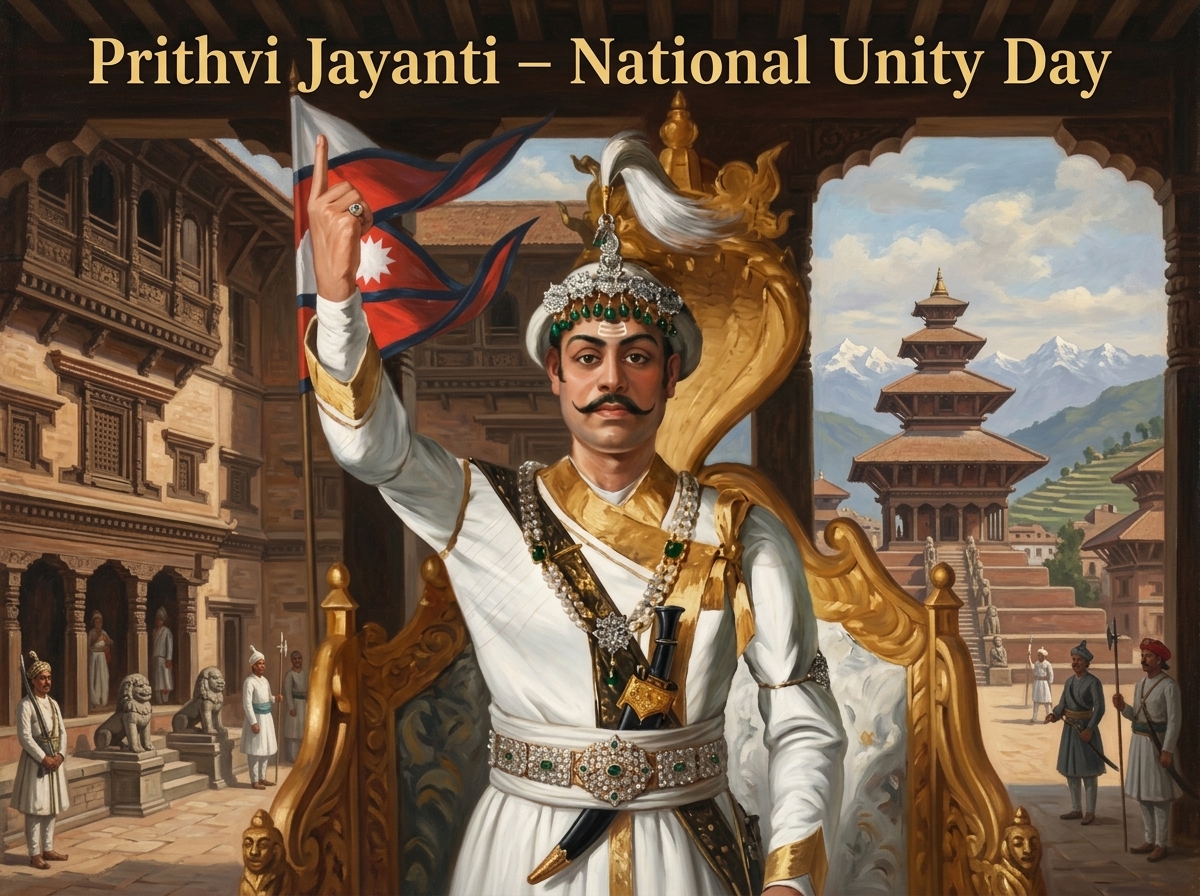
Prithvi Jayanti marks his birth anniversary and is also associated with National Unity Day in Nepal. The occasion encourages people to learn about the country’s past, discuss national identity, and reflect on the meaning of unity in a diverse society.
When Is Prithvi Jayanti Celebrated in Nepal?
Prithvi Jayanti is observed every year on Poush 27 of the Nepali calendar. In 2027, it falls on Tuesday, January 12, according to the Gregorian calendar.
The day commemorates the birth of Prithvi Narayan Shah in 1723. Government offices, educational institutions, and cultural organizations may hold commemorative programmes, speeches, and events highlighting his role in Nepal’s history.
Who Was Prithvi Narayan Shah?
Prithvi Narayan Shah was born in 1723 in Gorkha. He became the ruler of Gorkha in 1743 and pursued a campaign to bring several independent principalities under one kingdom.
At the time, the Kathmandu Valley contained powerful city-states, including Kathmandu, Patan, and Bhaktapur. Other parts of present-day Nepal were also divided among different kingdoms and principalities.
Through military campaigns, diplomacy, and political strategy, Prithvi Narayan Shah expanded the Gorkha kingdom. His forces captured Kathmandu in 1768, followed by Patan in 1768 and Bhaktapur in 1769. These events were major milestones in the formation of modern Nepal.
He died in 1775, but the unification campaign continued under his successors.
Why Is Prithvi Jayanti Important?
Prithvi Jayanti is significant because it provides an opportunity to study the historical processes that shaped Nepal as a country.
1. Remembering Nepal’s unification
Prithvi Narayan Shah played a central role in bringing many smaller kingdoms under one political authority. His campaigns helped establish the foundations of the state that later developed into modern Nepal.
2. Promoting national unity
The day is often called National Unity Day. It encourages people to think about the shared future of a country made up of many languages, ethnic groups, religions, and cultures.
True unity, however, also requires mutual respect, equal rights, and recognition of Nepal’s diversity.
3. Understanding Nepal’s history
The occasion gives students and readers a reason to learn about the kingdoms that existed before unification, the military campaigns of the 18th century, and the development of Nepal’s political system.
4. Reflecting on leadership
Prithvi Narayan Shah’s political and military strategies offer a historical case study in leadership, state-building, diplomacy, and the use of power. Studying his achievements alongside the conflicts and consequences of unification provides a fuller understanding of the past.
Prithvi Narayan Shah’s Divya Upadesh
Prithvi Narayan Shah is also remembered for the teachings commonly known as Divya Upadesh. These sayings are associated with his views on governance, national security, economic independence, and relations with neighbouring powers.
One well-known idea from the text describes Nepal as a garden of people from different castes and communities. It is often discussed in connection with Nepal’s diversity and national identity.
The Divya Upadesh remains an important historical text, although interpretations of its ideas differ among scholars and readers. Exploring the text can help people understand the political thinking of the period.
How Is Prithvi Jayanti Celebrated in Nepal?
On this day, people and organizations remember Prithvi Narayan Shah through educational and cultural programmes. Activities may include:
- Wreath-laying ceremonies at statues and memorials.
- Speeches and discussions about Nepal’s unification and history.
- School and college programmes featuring essays, debates, and presentations.
- Visits to historical sites, including places connected with the Shah dynasty.
- Public discussions about national identity, diversity, and the meaning of unity in modern Nepal.
The occasion can also encourage young people to explore Nepal’s history beyond textbooks and understand the different perspectives surrounding the unification process.
Frequently Asked Questions (FAQs)
1. When is Prithvi Jayanti celebrated in Nepal?
Prithvi Jayanti is celebrated on Poush 27 every year. In 2027, it falls on Monday, January 11, according to the Nepali calendar.
2. Why is Prithvi Jayanti also called National Unity Day?
It is also known as National Unity Day because Prithvi Narayan Shah played a major role in unifying many principalities into a larger kingdom. The day encourages reflection on Nepal’s shared identity and diversity.
3. What is Divya Upadesh?
Divya Upadesh is a collection of teachings associated with Prithvi Narayan Shah. It discusses matters such as governance, national interests, economic policy, and relations with neighbouring powers. The Nepal Law Commission provides a copy of the text.
Conclusion
Prithvi Jayanti is an important occasion to remember the historical role of Prithvi Narayan Shah in Nepal’s unification. It invites us to explore the country’s past, understand its complex history, and reflect on how people from different communities can build a more inclusive future together.
What does National Unity Day mean to you? Share your thoughts in the comments, and share this article with friends and family who want to learn more about Nepal’s history.