
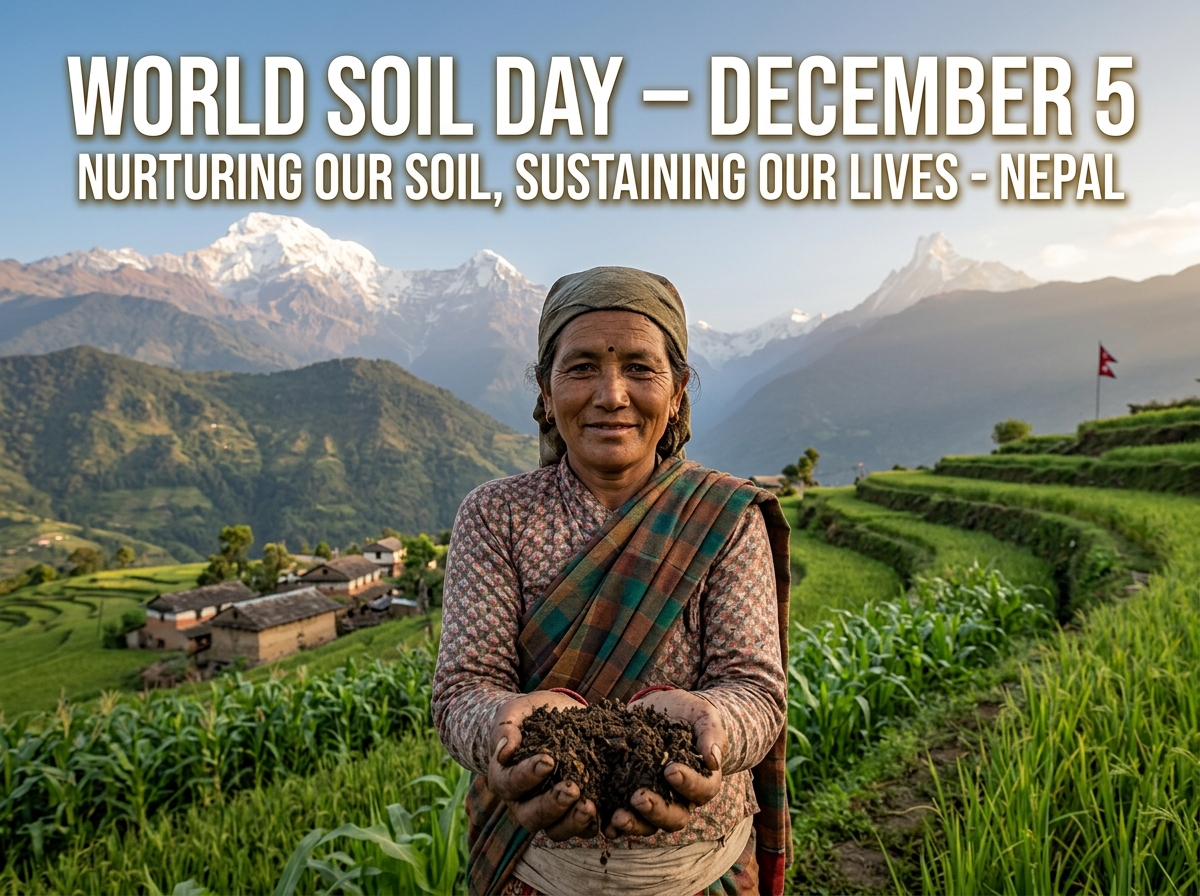
Introduction: Why Do We Celebrate World Soil Day?
Have you ever wondered where our food comes from? While farmers grow crops and nature provides sunlight and rain, healthy soil plays an equally important role. Soil supports plant growth, stores water, provides nutrients, and helps maintain the balance of our ecosystem.
Every year, World Soil Day reminds people around the world that soil is a valuable natural resource that needs protection. Soil degradation, erosion, pollution, and unsustainable farming practices threaten agricultural productivity and environmental health.
In a country like Nepal, where many families depend on agriculture, protecting soil is essential for food security, rural livelihoods, and sustainable development.
When Is World Soil Day 2026?
World Soil Day is observed every year on December 5. In 2026, it falls on Saturday, December 5.
The day encourages governments, farmers, students, environmental organizations, and the general public to understand the importance of healthy soil and take action to protect it.
History of World Soil Day
The Food and Agriculture Organization (FAO) of the United Nations has played a major role in promoting global awareness of soil health.
The International Union of Soil Sciences proposed an international day to celebrate soil in 2002. Later, the FAO supported the initiative, and the United Nations General Assembly officially designated December 5 as World Soil Day in 2013. The first official observance took place in 2014.
Since then, the day has helped raise awareness about soil conservation, sustainable agriculture, and the relationship between healthy soil and human well-being.
Why Is World Soil Day Important?
Soil is much more than dirt beneath our feet. It is a living system that supports life on Earth.
1. Soil Helps Produce Food
Healthy soil supplies plants with essential nutrients and supports the growth of crops such as rice, wheat, maize, vegetables, and fruits. Farmers need fertile soil to maintain productive farms and reliable food supplies.
2. Soil Supports Biodiversity
Soil contains microorganisms, fungi, insects, earthworms, and other organisms. These living things break down organic matter, recycle nutrients, and help maintain soil fertility.
3. Soil Stores and Filters Water
Healthy soil absorbs and stores water, allowing plants to use it during dry periods. It also helps filter water as it moves through the ground.
4. Soil Helps Fight Climate Change
Soil stores carbon and can help reduce the amount of carbon dioxide in the atmosphere. However, poor land management and soil degradation can release stored carbon and damage ecosystems.
5. Soil Protects the Environment
Healthy soil supports vegetation and helps reduce erosion. This is particularly important in Nepal’s hills and mountainous regions, where heavy rainfall, deforestation, and poorly managed land can increase soil loss and landslide risks.
World Soil Day and Its Importance in Nepal
Agriculture remains an important part of Nepal’s economy and rural life. Farmers depend on healthy soil to grow food and support their families.
However, soil erosion, declining fertility, unmanaged waste, excessive chemical use, and changing rainfall patterns can affect soil quality in different parts of the country.
Nepal can benefit from practical soil conservation measures, including:
- Planting trees: Tree roots help hold soil together and reduce erosion.
- Terrace farming: Properly maintained terraces can reduce runoff on sloping land.
- Using compost: Organic compost adds nutrients and improves soil structure.
- Growing cover crops: Cover crops protect bare soil from rain and wind.
- Reducing unnecessary chemicals: Responsible fertilizer and pesticide use can help protect soil organisms and water quality.
- Managing livestock grazing: Controlled grazing helps prevent the loss of protective vegetation.
Schools, local governments, farmers, and community groups can also organize awareness programs, plantation campaigns, and soil conservation activities.
How Can We Protect Soil in Our Daily Lives?
Everyone can contribute to soil conservation. You do not need to own a farm or work in environmental protection to make a difference.
Here are five simple actions:
- Compost kitchen waste: Turn suitable fruit and vegetable scraps into compost instead of sending them to landfills.
- Avoid littering: Dispose of plastic, batteries, and other waste responsibly.
- Plant suitable vegetation: Grow trees, grass, and plants where appropriate to help protect exposed soil.
- Support sustainable farming: Buy locally grown seasonal produce when practical and support farmers who use responsible farming methods.
- Spread awareness: Teach children and family members why healthy soil matters.
Small actions can make a meaningful difference when communities work together.
World Soil Day 2026 Theme
The official theme for World Soil Day 2026 should be checked on the FAO’s official World Soil Day website before publication. Avoid using an unverified theme in your headline or article.
Each year’s theme highlights a particular soil-related issue and encourages people to take action toward healthier soils and more sustainable land management.
Frequently Asked Questions (FAQs)
1. When is World Soil Day celebrated?
World Soil Day is celebrated annually on December 5. In 2026, it falls on Saturday, December 5.
2. Why do we celebrate World Soil Day?
We celebrate World Soil Day to raise awareness about the importance of soil for food production, biodiversity, water management, climate regulation, and environmental protection.
3. How can students celebrate World Soil Day?
Students can celebrate by planting suitable trees, preparing compost, participating in school awareness programs, learning about soil erosion, and organizing activities to keep their surroundings clean.
Conclusion
World Soil Day is a reminder that healthy soil is essential for healthy people, productive agriculture, and a sustainable planet. Soil forms slowly, but it can be damaged quickly through erosion, pollution, and poor land management.
In Nepal and around the world, protecting soil requires cooperation between farmers, communities, schools, and governments. By adopting sustainable practices and spreading awareness, we can help preserve this valuable resource for future generations.
What steps do you take to protect the environment and keep soil healthy? Share your thoughts in the comments, share this article with your friends, and subscribe to our website for more informative articles on important days and environmental awareness.