
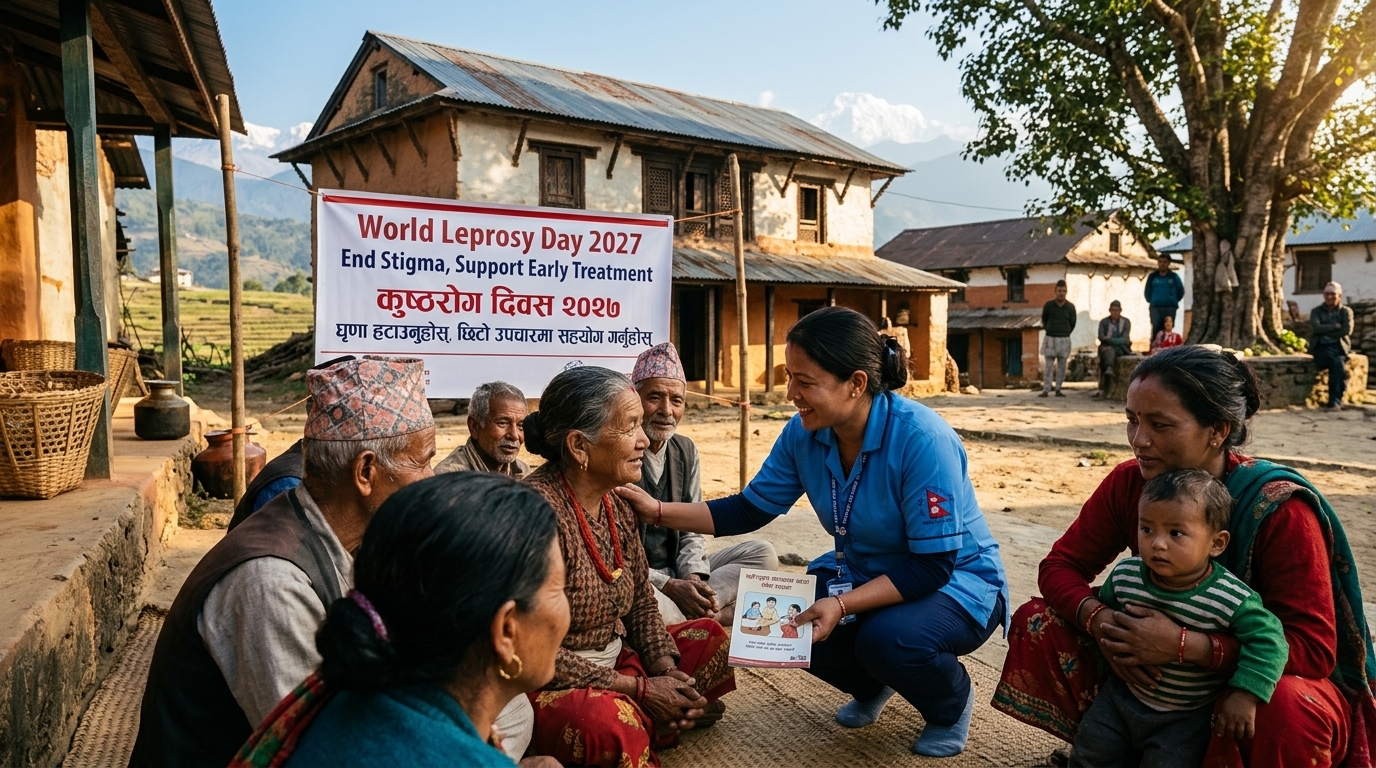
World Leprosy Day: Raise Awareness and End Stigma
Every person deserves healthcare, dignity, and equal treatment. Yet people affected by leprosy still face fear, discrimination, and social exclusion in many parts of the world.
World Leprosy Day raises awareness about this treatable disease and encourages communities to replace myths with facts. The day also highlights the experiences of people affected by leprosy and calls for an end to the stigma surrounding it.
For Nepal, this issue remains important. Although the country eliminated leprosy as a public health problem in 2010, new cases continue to occur. Early diagnosis, treatment, and community awareness remain essential.
When Is World Leprosy Day 2027?
World Leprosy Day is observed every year on the last Sunday of January.
In 2027, World Leprosy Day falls on Sunday, January 31, 2027. The day brings health organisations, governments, communities, and advocates together to promote awareness and support people affected by leprosy.
The official theme for 2027 has not yet been announced in the available World Health Organization information. Check the WHO World Leprosy Day page for updates.
What Is Leprosy?
Leprosy, also known as Hansen’s disease, is a chronic infectious disease caused mainly by the bacterium Mycobacterium leprae. It primarily affects the skin and peripheral nerves, and it can also affect the eyes and the lining of the nose and upper respiratory tract.
Without treatment, leprosy can cause nerve damage and permanent disability. However, the good news is that leprosy is curable, and early treatment can help prevent serious complications.
Common Signs and Symptoms
Possible signs of leprosy include:
- Pale or reddish patches on the skin with reduced sensation.
- Numbness or loss of feeling in certain areas.
- Weakness in the hands or feet.
- Thickened peripheral nerves.
- Eye problems in some cases.
These symptoms can have other causes, so they do not automatically mean a person has leprosy. Anyone who notices suspicious skin changes or numbness should seek assessment from a qualified health professional.
History and Purpose of World Leprosy Day
World Leprosy Day was established to raise awareness of leprosy and challenge the prejudice that has affected people living with the disease for generations.
The observance is associated with the work of French humanitarian Raoul Follereau, who helped draw international attention to people affected by leprosy. Today, the day focuses on public education, equal rights, access to healthcare, and respect for affected individuals.
Its message is simple: people should not be judged, isolated, or denied opportunities because of a medical condition that can be treated.
Why Is World Leprosy Day Important?
World Leprosy Day 2027 is an opportunity to share accurate information and encourage action.
Its key objectives include:
- Raising awareness: Helping people recognise possible signs and seek medical advice early.
- Ending discrimination: Challenging harmful myths and unfair treatment.
- Promoting early diagnosis: Encouraging people to access healthcare without fear or shame.
- Supporting treatment: Improving understanding of available medical care.
- Protecting human rights: Ensuring affected people can participate fully in family, education, work, and community life.
Stigma can prevent people from seeking help. When communities respond with understanding rather than fear, more people may feel safe getting a diagnosis and completing treatment.
Leprosy Awareness in Nepal
Nepal has made progress in controlling leprosy, but the disease has not disappeared. The World Health Organization reported in January 2026 that transmission continued in 16 high-burden districts, despite Nepal having eliminated leprosy as a public health problem in 2010.
Health workers, local governments, schools, and community organisations can help by sharing accurate information and encouraging people to seek care early.
People in Nepal can contribute by:
- Sharing information from reliable health sources.
- Avoiding hurtful language and discrimination.
- Encouraging anyone with concerning symptoms to visit a health facility.
- Supporting the dignity and inclusion of people affected by leprosy.
- Helping families understand that treatment is available.
Myths and Facts About Leprosy
Myth: Leprosy has no cure.
Fact: Leprosy is curable with multidrug therapy, a combination of medicines recommended by the WHO.
Myth: You can catch leprosy by shaking hands or sharing a meal.
Fact: Leprosy does not spread through casual contact such as shaking hands, hugging, sitting beside someone, or sharing food. Transmission is associated with prolonged, close contact with an untreated person.
Myth: People affected by leprosy should be isolated from society.
Fact: People affected by leprosy deserve dignity and inclusion. Treatment is effective, and people receiving treatment can continue participating in everyday life.
How Can You Observe World Leprosy Day?
You do not need to be a healthcare professional to make a difference. You can observe the day by:
- Sharing reliable information about leprosy on social media.
- Learning about symptoms, diagnosis, and treatment from trusted health organisations.
- Challenging myths and discriminatory attitudes when you encounter them.
- Supporting awareness programmes organised by health institutions and community groups.
- Encouraging respectful conversations about health and disability.
Even a simple, accurate post can help someone understand that leprosy is treatable and that people affected by it deserve respect.
Conclusion
World Leprosy Day reminds us that medical progress must go hand in hand with compassion. Leprosy is curable, but stigma can still prevent people from seeking timely care and living with dignity.
On World Leprosy Day 2027, let us share facts, challenge discrimination, and support accessible healthcare in Nepal and around the world.
Have you seen leprosy awareness programmes in your community? Share your thoughts in the comments and pass this article along to help spread awareness.