


Introduction
Information plays an important role in improving people’s lives. From education and healthcare to employment and technology, access to reliable information helps people make better decisions and understand the challenges facing their communities.
World Development Information Day is observed every year on October 24 to highlight the importance of information in promoting development and increasing public awareness of global issues.
The day reminds us that development is not only about building roads, hospitals and schools. It is also about sharing knowledge, reducing information gaps and helping people understand the issues that affect their future.
When Is World Development Information Day 2026?
World Development Information Day 2026 will be observed on Saturday, October 24, 2026.
The United Nations established this international observance to draw attention to development problems and the need for better international cooperation to address them.
October 24 is also United Nations Day, which commemorates the entry into force of the UN Charter in 1945.
History of World Development Information Day
The United Nations General Assembly established World Development Information Day in 1972 through Resolution 3038 (XXVII).
The purpose was to attract public attention to development challenges and encourage people to participate in efforts to solve them.
The UN recognized that information and communication could help countries work together, improve public understanding and accelerate social and economic progress.
Since then, the observance has highlighted the role of information in creating a more informed, inclusive and sustainable world.
Why Is World Development Information Day Important?
1. Raises Awareness of Global Challenges
Many communities around the world face poverty, hunger, unemployment, limited healthcare and unequal access to education.
Reliable information helps people understand these challenges and learn about possible solutions. It also encourages governments, organizations and citizens to take meaningful action.
2. Promotes Access to Information
Access to accurate information allows people to understand their rights, discover opportunities and make informed decisions.
For example, students can learn about scholarships, farmers can access weather forecasts, and families can find information about healthcare services.
3. Supports Sustainable Development
The United Nations Sustainable Development Goals (SDGs) aim to build a more peaceful, fair and sustainable world by 2030.
Sharing knowledge about poverty reduction, quality education, gender equality, clean energy and environmental protection helps communities understand these goals and contribute to them.
4. Encourages International Cooperation
Development challenges often affect more than one country. Climate change, public health emergencies and economic inequality require cooperation across borders.
Information sharing helps countries exchange ideas, research, technology and practical solutions.
5. Highlights the Role of Digital Technology
The internet, smartphones and digital platforms have changed how people access information.
Online learning, digital public services and mobile applications can create new opportunities. However, the digital divide remains a challenge for people who lack internet access, digital skills or affordable devices.
World Development Information Day encourages us to make information accessible to everyone.
World Development Information Day in Nepal
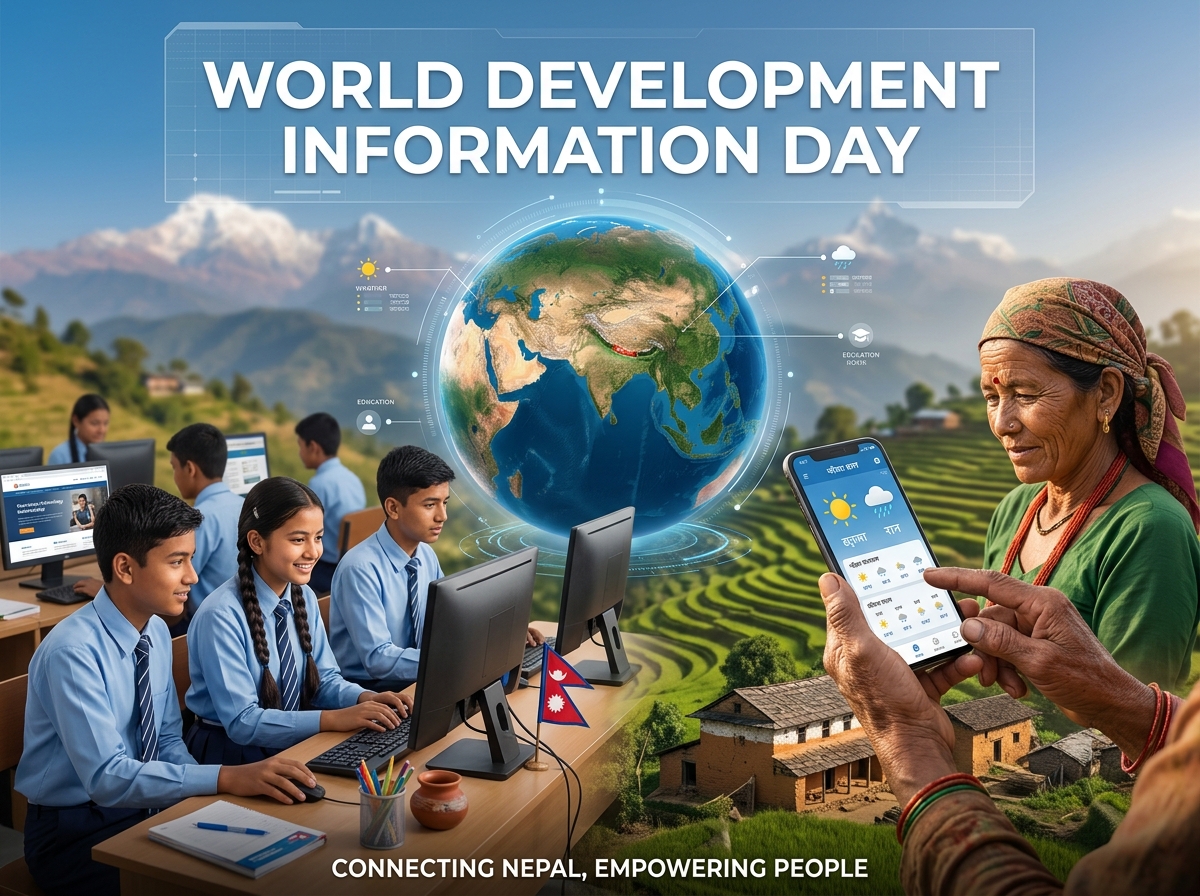
For Nepal, this observance is especially relevant because access to information can support education, rural development, healthcare and economic opportunities.
People living in remote Himalayan and rural communities may face difficulties accessing reliable information and public services.
Better communication systems and digital services can help address these challenges.
Here are some practical examples of how information supports development in Nepal:
- Education: Students can access online learning materials, scholarship announcements and examination updates.
- Agriculture: Farmers can use weather forecasts, market prices and modern farming guidance to improve their work.
- Healthcare: Public awareness campaigns can share information about disease prevention, nutrition and available health services.
- Employment: Young people can discover training programs, job vacancies and entrepreneurship opportunities.
- Disaster preparedness: Timely warnings about floods, landslides and earthquakes can help communities prepare and respond more effectively.
Government agencies, educational institutions, media organizations and local communities all have a role in making useful information available to the public.
How Can We Celebrate World Development Information Day?
You do not need to organize a large event to mark this day. Small actions can make a difference.
Here are a few ways to participate:
- Share reliable information: Post useful facts about education, health, the environment or development on social media.
- Support digital literacy: Help family members or community members learn to use online services safely.
- Promote awareness: Organize discussions, school activities or community programs about sustainable development.
- Fight misinformation: Verify information before sharing it and use trustworthy sources.
- Learn about the SDGs: Explore the UN Sustainable Development Goals and identify ways to support your community.
- Include underserved communities: Help ensure that people with limited internet access or disabilities can access information in suitable formats.
The Role of Young People in Development
Young people can make a meaningful contribution by using technology and communication to solve local problems.
They can create educational videos, publish informative articles, support digital literacy campaigns and raise awareness about environmental protection.
In Nepal, young creators, teachers, students and community volunteers can use digital platforms to share useful knowledge in local languages.
The goal should not simply be to spread more information, but to share accurate, accessible and useful information that improves people’s lives.
Frequently Asked Questions (FAQs)
1. When is World Development Information Day celebrated?
World Development Information Day is observed every year on October 24. In 2026, it falls on Saturday.
2. Why do we celebrate World Development Information Day?
The day raises awareness of global development challenges and highlights the importance of information and communication in supporting development and international cooperation.
3. What is the importance of World Development Information Day in Nepal?
It highlights how reliable information can improve access to education, healthcare, agricultural knowledge, employment opportunities and disaster warnings, particularly in underserved communities.
Conclusion
World Development Information Day reminds us that information is a powerful tool for positive change. When people have access to reliable knowledge, they can make better decisions, identify opportunities and contribute to the development of their communities.
In Nepal and around the world, we can help build a better future by sharing accurate information, promoting digital literacy and ensuring that knowledge reaches people who need it most.
What role do you think information and technology can play in Nepal’s development? Share your thoughts in the comments, and share this article with others to spread awareness.


