


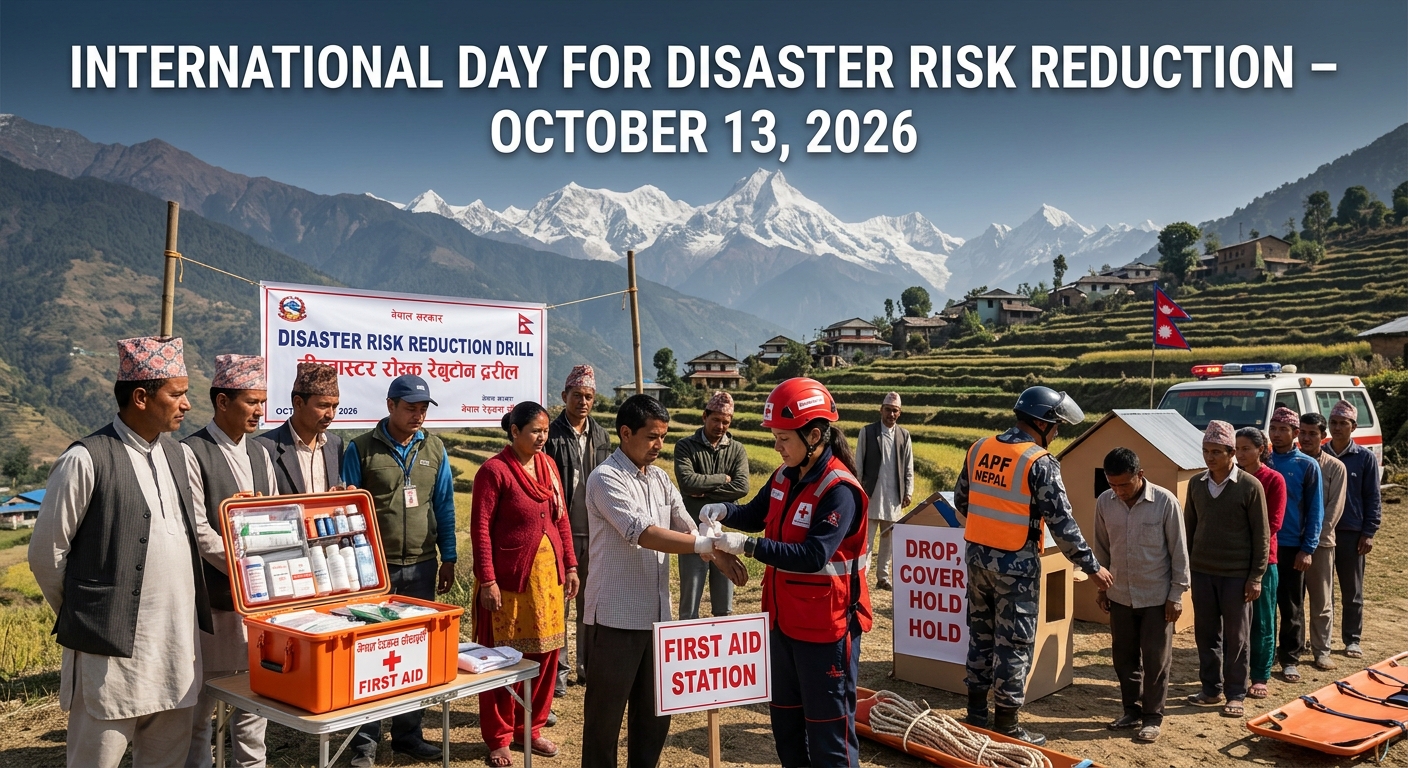
International Day for Disaster Risk Reduction: Importance and Safety Tips
Every year, natural hazards such as earthquakes, floods, landslides, and storms affect millions of people around the world. These disasters can destroy homes, damage infrastructure, and take precious lives. However, many of their impacts can be reduced through proper planning, public awareness, and early warning systems.
The International Day for Disaster Risk Reduction is observed every year on October 13 to raise awareness about preventing disasters and reducing their risks. The day reminds governments, communities, and individuals that preparing before a disaster strikes can save lives.
For a disaster-prone country like Nepal, this day is especially important.
What Is the International Day for Disaster Risk Reduction?
The International Day for Disaster Risk Reduction is a global observance established by the United Nations to promote awareness of disaster prevention and risk reduction.
It encourages people to understand disaster risks and take practical steps to protect lives, property, and the environment. The day also highlights the importance of cooperation between governments, communities, businesses, and international organizations.
Rather than focusing only on emergency response, disaster risk reduction emphasizes prevention, preparedness, and resilience.
Why Is October 13 Important?
October 13 provides an opportunity to discuss how societies can reduce disaster risks before emergencies occur.
The United Nations General Assembly established this international observance in 1989. Today, it supports global efforts to build safer and more resilient communities.
The main objectives include:
- Raising awareness about disaster risks.
- Encouraging investment in disaster prevention.
- Promoting early warning systems and emergency planning.
- Protecting vulnerable communities.
- Encouraging cooperation among governments and citizens.
The International Day for Disaster Risk Reduction also supports the goals of the Sendai Framework for Disaster Risk Reduction 2015–2030, an international agreement aimed at reducing disaster losses.
Importance of Disaster Risk Reduction in Nepal
Nepal is beautiful, but its geography makes it vulnerable to several natural hazards. The country experiences earthquakes, monsoon floods, landslides, avalanches, and glacial lake outburst floods.
Mountainous terrain, intense rainfall, unplanned construction, and environmental degradation can increase disaster risks in some areas.
1. Earthquake Preparedness
Nepal lies in a seismically active region. Strong earthquakes can damage buildings, roads, schools, and hospitals.
Constructing earthquake-resistant buildings, following building codes, and practicing earthquake drills can help reduce casualties.
2. Floods and Landslides
During the monsoon season, heavy rainfall can cause floods and landslides across Nepal. These events may destroy farmland, disrupt transportation, and displace families.
Better drainage systems, slope protection, river monitoring, and timely warnings can help communities prepare.
3. Protecting Vulnerable Communities
Children, older adults, people with disabilities, and families living in high-risk areas may face greater challenges during disasters.
Local authorities should ensure that emergency warnings, evacuation plans, shelters, and relief services are accessible to everyone.
How Can We Reduce Disaster Risks?
Disaster risk reduction is not only the responsibility of the government. Individuals and families can also take simple but important steps.
Practical Disaster Safety Tips
- Prepare an emergency kit: Keep drinking water, dry food, a first-aid kit, a torch, batteries, essential medicines, and copies of important documents.
- Know your evacuation routes: Identify safe places near your home, school, or workplace.
- Follow official warnings: Pay attention to weather alerts and instructions from local authorities.
- Build safer homes: Follow approved building standards and avoid unsafe construction in high-risk areas.
- Learn basic first aid: First-aid knowledge can help you assist injured people while waiting for emergency services.
- Practice emergency drills: Families, schools, and offices should regularly practice what to do during earthquakes, fires, and floods.
- Protect the environment: Proper waste management, responsible land use, and vegetation protection can help address certain environmental risks.
Even small actions can make a meaningful difference when a disaster occurs.
Role of Technology in Disaster Risk Reduction
Modern technology is becoming increasingly important in disaster preparedness. Weather forecasting, satellite monitoring, mobile alerts, and digital mapping help authorities identify risks and communicate warnings.
In Nepal, timely information about heavy rainfall, rising river levels, and landslide risks can help people move to safer places before conditions become dangerous.
However, technology alone is not enough. Warnings must reach remote communities, and people must understand how to respond to them.
How Can Schools and Communities Participate?
Schools and local communities can make disaster preparedness part of everyday life.
They can organize earthquake drills, first-aid training, awareness programs, and discussions about local hazards. Community members can also identify vulnerable households and prepare evacuation plans together.
On the International Day for Disaster Risk Reduction, people can share verified safety information, check emergency supplies, and learn about the risks in their neighborhoods.
Frequently Asked Questions (FAQs)
1. When is the International Day for Disaster Risk Reduction observed?
It is observed every year on October 13 to promote disaster prevention, preparedness, and risk reduction.
2. Why is disaster risk reduction important in Nepal?
Nepal faces risks from earthquakes, floods, landslides, and other natural hazards. Preparedness, safer construction, early warning systems, and public awareness can help reduce deaths and property damage.
3. What can individuals do to reduce disaster risks?
Individuals can prepare emergency kits, follow official warnings, learn evacuation routes, practice safety drills, and make sure their homes and families are prepared for emergencies.
Conclusion
The International Day for Disaster Risk Reduction reminds us that disasters may not always be preventable, but their consequences can often be reduced through awareness, planning, and collective action.
For Nepal, investing in safer infrastructure, reliable early warning systems, community education, and environmental protection is essential to building resilient communities.
Remember: preparedness saves lives. Start by making a simple emergency plan for your family and sharing reliable safety information with others.
What disaster preparedness measures does your community need most? Share your thoughts in the comments, and share this article with friends and family to help spread awareness.


I have tried quite a few platforms over the years and this one finally made me feel confident about my deposits. The odds are competitive and I never feel rushed to deposit more than I can afford. It feels like a place built for regular players like me. Visit bmy88