
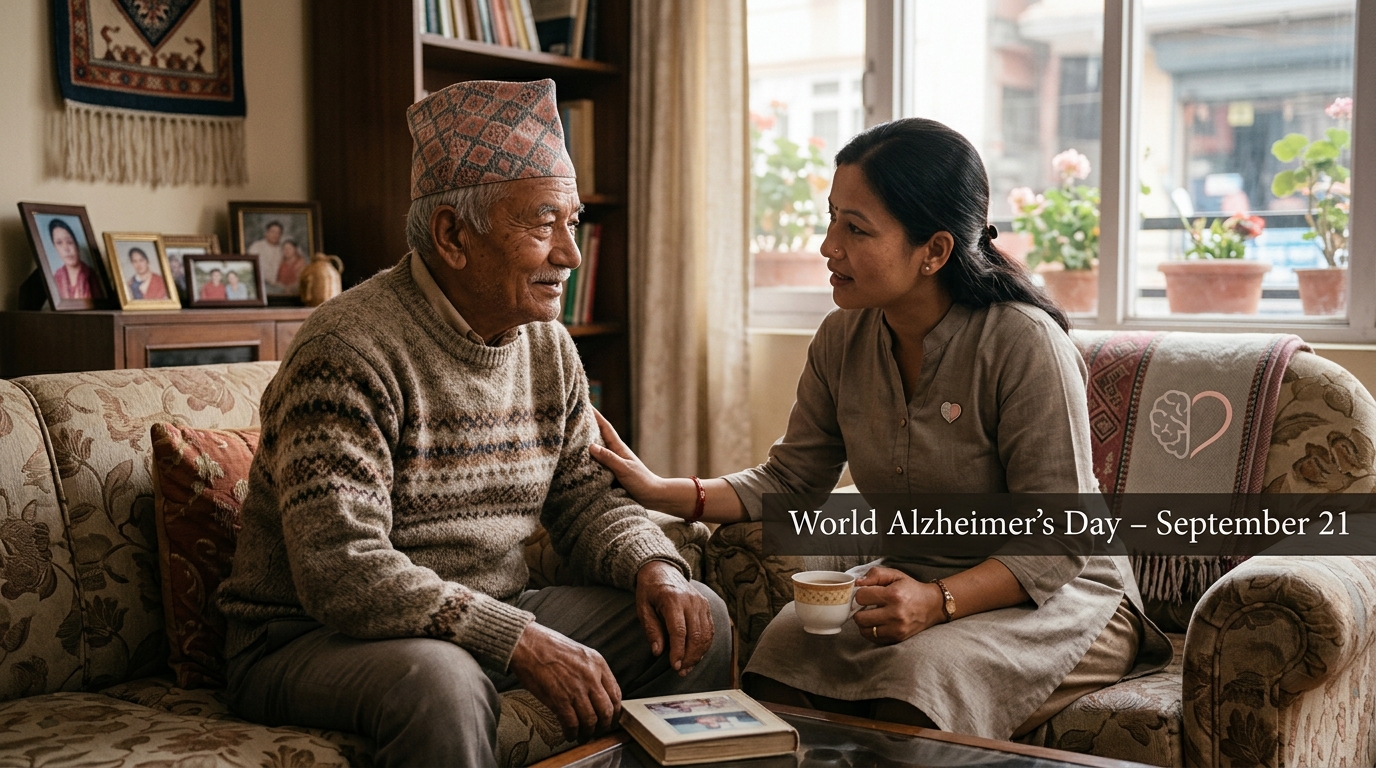
What Is World Alzheimer’s Day?
Every year, World Alzheimer’s Day is observed on September 21 to raise awareness about Alzheimer’s disease and other forms of dementia. The day encourages people to understand memory-related illnesses, recognize early warning signs, and support individuals and families affected by these conditions.
Alzheimer’s disease can gradually affect a person’s memory, thinking, communication, and ability to perform everyday activities. It can change not only the life of the person diagnosed but also the lives of their family members and caregivers.
In Nepal, where families often play an important role in caring for older adults, awareness about Alzheimer’s disease is particularly valuable. Understanding the condition can help families respond with patience, compassion, and appropriate medical support.
When Is World Alzheimer’s Day 2026?
World Alzheimer’s Day 2026 falls on Monday, September 21, 2026.
The observance is part of World Alzheimer’s Month, which takes place throughout September. It provides an opportunity for communities, healthcare professionals, organizations, and families to discuss dementia and challenge the stigma surrounding it.
According to the World Health Organization (WHO), approximately 57 million people worldwide were living with dementia in 2021. Alzheimer’s disease is the most common cause, accounting for an estimated 60–70% of dementia cases.
Why Is World Alzheimer’s Day Important?
World Alzheimer’s Day reminds us that memory loss and cognitive difficulties should not be ignored or treated as a reason to discriminate against someone.
Here are some important reasons to observe this day:
- Raise awareness: Help people understand Alzheimer’s disease and dementia.
- Recognize early symptoms: Encourage families to seek medical advice when they notice persistent changes.
- Reduce stigma: Promote kindness and respect for people living with dementia.
- Support caregivers: Recognize the emotional, physical, and financial challenges faced by families.
- Encourage research: Support efforts to improve diagnosis, treatment, and care.
In Nepal, awareness can also encourage families to discuss changes in memory or behaviour with qualified healthcare professionals instead of assuming that every symptom is simply a normal part of ageing.
What Is Alzheimer’s Disease?
Alzheimer’s disease is a progressive brain disorder that damages brain cells and affects memory, thinking, and behaviour. Its symptoms usually develop gradually and become more noticeable over time.
Although Alzheimer’s disease is more common among older adults, it is not an inevitable part of ageing. Dementia is a broader term for a group of symptoms that interfere with daily functioning, while Alzheimer’s disease is its most common cause.
There is currently no universal cure for Alzheimer’s disease. However, medical care, appropriate treatment, supportive routines, and family involvement can help people manage symptoms and maintain their quality of life.
Early Symptoms of Alzheimer’s Disease
Recognizing possible warning signs can help families seek medical advice sooner.
Common symptoms include:
- Frequently forgetting recent conversations or events.
- Repeating the same questions several times.
- Misplacing familiar objects and struggling to find them.
- Becoming confused in familiar places.
- Having difficulty finding words or following conversations.
- Struggling with familiar tasks or everyday decisions.
- Experiencing changes in mood, personality, or social behaviour.
Occasional forgetfulness does not automatically mean someone has Alzheimer’s disease. Other medical conditions, medications, sleep problems, and nutritional deficiencies can also affect memory.
If memory problems persist, worsen, or interfere with daily life, consult a qualified healthcare professional for an assessment.
How Can We Reduce the Risk of Dementia?
No lifestyle change can guarantee that a person will avoid Alzheimer’s disease. However, research suggests that healthy habits and managing certain health conditions may help reduce the risk of cognitive decline.
Consider these practical steps:
1. Stay Physically Active
Walking, cycling, gardening, and other suitable physical activities can support overall health. Choose activities according to your age, fitness level, and medical needs.
2. Eat a Balanced Diet
Include vegetables, fruits, whole grains, pulses, nuts, and other nutritious foods in your daily meals. A balanced diet supports general and cardiovascular health.
3. Keep Your Mind Active
Reading, learning new skills, solving puzzles, and participating in meaningful activities can help keep the mind engaged.
4. Maintain Social Connections
Spend time with family and friends. Social activities and conversations can support emotional well-being and help reduce isolation.
5. Manage Existing Health Conditions
Work with a healthcare professional to manage high blood pressure, diabetes, high cholesterol, and other relevant conditions.
6. Avoid Smoking and Protect Your Sleep
Avoid tobacco, limit harmful alcohol use, and maintain healthy sleeping habits. Seek medical advice if sleep problems persist.
These steps support general health but do not guarantee prevention. For evidence-based guidance, consult the WHO’s recommendations on dementia risk reduction.
How Can Families Support People With Alzheimer’s?
Family support can make a meaningful difference in the daily lives of people living with Alzheimer’s disease.
Here are some practical ways to help:
- Speak slowly, calmly, and respectfully.
- Be patient when the person repeats questions.
- Maintain a familiar daily routine.
- Keep important objects in consistent places.
- Make the home safer and reduce the risk of falls or wandering.
- Encourage appropriate social activities and gentle exercise.
- Seek professional guidance when symptoms change.
- Share caregiving responsibilities and give caregivers time to rest.
Most importantly, remember that a person with Alzheimer’s disease deserves dignity, affection, and respect. Avoid blaming them for memory problems they cannot fully control.
How Can You Observe World Alzheimer’s Day?
You do not need to organize a large event to make a difference. Simple actions can help spread awareness.
You can observe World Alzheimer’s Day by:
- Sharing reliable information about Alzheimer’s disease on social media.
- Talking with family members about dementia and healthy ageing.
- Learning to recognize possible early warning signs.
- Supporting dementia awareness campaigns and caregiver initiatives.
- Checking on older relatives and helping them access healthcare when needed.
Even a small conversation can encourage someone to seek help or treat a family member with greater understanding.
Frequently Asked Questions (FAQs)
1. When is World Alzheimer’s Day celebrated?
World Alzheimer’s Day is celebrated every year on September 21. In 2026, it falls on Monday.
2. What is the difference between Alzheimer’s disease and dementia?
Dementia is a general term for a decline in memory, thinking, and other cognitive abilities that affects daily life. Alzheimer’s disease is the most common cause of dementia.
3. Can Alzheimer’s disease be cured?
There is currently no universal cure for Alzheimer’s disease. However, medical care, certain treatments, supportive routines, and caregiver assistance can help manage symptoms and improve quality of life.
Conclusion
World Alzheimer’s Day is a reminder that awareness, understanding, and compassion matter when supporting people affected by memory-related conditions. By recognizing warning signs, encouraging medical assessment, promoting healthy habits, and supporting caregivers, we can help build more informed and caring communities.
In Nepal and around the world, let us treat older adults with patience and respect while helping families understand the challenges of Alzheimer’s disease.
Have you learned something new about Alzheimer’s disease? Share this article with your friends and family, leave a comment below, and follow our blog for more health awareness articles.