
Introduction
Mountains are more than beautiful landscapes. They provide fresh water, support wildlife, protect biodiversity, and sustain millions of people around the world. From the snow-covered peaks of the Himalayas to the green hills of Nepal, mountains play an important role in our daily lives.
Every year, the world celebrates International Mountain Day to raise awareness about the importance of mountains and the challenges faced by mountain communities.
For Nepal, a country famous for Mount Everest and the magnificent Himalayan range, this day has special significance. It reminds us to protect our natural heritage and use mountain resources responsibly.
When Is International Mountain Day 2026?
International Mountain Day is celebrated every year on December 11. In 2026, it falls on Friday, December 11.
The United Nations established this international observance following the success of the International Year of Mountains in 2002. The Food and Agriculture Organization of the United Nations (FAO) leads the global observance.
The main purpose of this day is to highlight the importance of mountain ecosystems, promote sustainable development, and encourage action to protect mountain environments.
Why Is International Mountain Day Important?
Mountains are essential to the environment and human life. However, climate change, pollution, deforestation, and unsustainable tourism are putting many mountain regions at risk.
1. Mountains Provide Fresh Water
Mountain glaciers, snowfields, rivers, and springs supply water to millions of people. In Nepal, rivers originating in the Himalayas support households, agriculture, and hydropower production.
Protecting mountain ecosystems helps safeguard these important water sources for future generations.
2. Mountains Support Biodiversity
Mountain regions are home to many unique plants and animals. Nepal’s mountain landscapes support wildlife such as the snow leopard and red panda, along with diverse forests and medicinal plants.
Protecting their natural habitats is essential for maintaining ecological balance.
3. Mountains Support Local Communities
Many mountain communities depend on farming, livestock, tourism, handicrafts, and forest resources for their livelihoods.
Sustainable development can create economic opportunities while preserving local traditions, cultures, and natural resources.
4. Mountains Help Regulate the Climate
Mountain forests and soils store carbon and support important ecological processes. However, rising temperatures are changing snowfall patterns, accelerating glacier loss in many regions, and increasing risks from floods and landslides.
These changes make mountain conservation increasingly important.
Nepal and the Beauty of the Himalayas
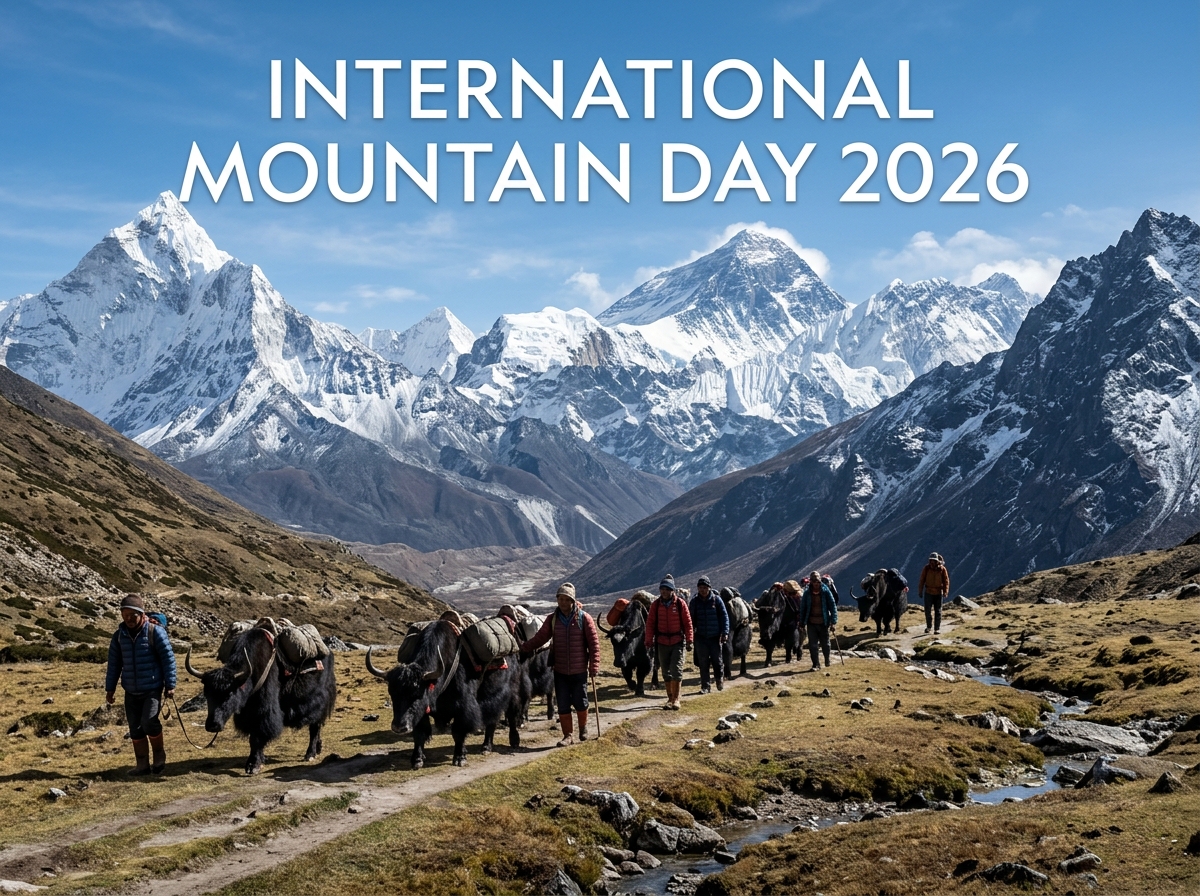
Nepal is internationally known for its spectacular Himalayan landscapes. Mount Everest, the world’s highest mountain above sea level, attracts climbers and trekkers from around the globe.
Other famous destinations include the Annapurna region, Langtang National Park, Manaslu, and Sagarmatha National Park.
Mountain tourism creates jobs for guides, porters, hotel owners, transport workers, and local businesses. It also introduces visitors to Nepal’s rich cultural heritage.
However, tourism can create problems when visitors leave plastic waste, damage trails, or put pressure on fragile ecosystems. Responsible tourism is therefore essential to keeping Nepal’s mountains beautiful and healthy.
International Mountain Day gives Nepal an opportunity to promote conservation, sustainable tourism, and the well-being of mountain communities.
Major Challenges Facing Mountains Today
Despite their importance, mountain ecosystems face several serious challenges.
- Climate change: Rising temperatures affect glaciers, snowfall, and mountain habitats.
- Glacier retreat: Melting glaciers can threaten long-term water security and increase certain natural hazards.
- Deforestation: Forest loss can contribute to soil erosion and habitat destruction.
- Plastic pollution: Waste from settlements and tourism can damage mountain environments.
- Landslides and floods: Heavy rainfall, unstable slopes, and changing environmental conditions can increase risks in vulnerable areas.
- Migration and limited opportunities: Some mountain communities face difficulties accessing education, healthcare, transport, and stable employment.
Addressing these challenges requires cooperation among governments, communities, businesses, and individuals.
How Can We Celebrate International Mountain Day?
Everyone can contribute to protecting mountains. You do not need to live near the Himalayas to make a difference.
Here are five simple ways to take action:
- Keep mountain destinations clean: Carry reusable bottles and bring your waste back with you.
- Choose responsible tourism: Respect local customs, follow designated trails, and support local businesses.
- Plant and protect trees: Participate in suitable local conservation activities.
- Spread awareness: Share educational posts, photographs, and conservation messages on social media.
- Support mountain communities: Buy locally made products and respect the knowledge and traditions of Indigenous Peoples and local communities.
Schools, colleges, tourism organizations, and community groups can also organize clean-up campaigns, nature walks, discussions, and environmental awareness programs.
Frequently Asked Questions (FAQs)
1. When is International Mountain Day celebrated?
International Mountain Day is observed every year on December 11. In 2026, it will be celebrated on Friday, December 11.
2. Why do we celebrate International Mountain Day?
The day raises awareness about the environmental, cultural, and economic importance of mountains. It also encourages sustainable development and the conservation of mountain ecosystems.
3. Why is International Mountain Day important for Nepal?
Nepal depends on its mountain ecosystems for water, biodiversity, tourism, agriculture, and local livelihoods. Protecting the Himalayas helps preserve the country’s natural heritage and supports future generations.
Conclusion
International Mountain Day is a reminder that mountains are valuable natural treasures that deserve our care and protection. They provide water, support biodiversity, sustain communities, and offer some of the world’s most remarkable landscapes.
For Nepal, protecting the Himalayas means protecting our environment, culture, economy, and future. Small actions, such as reducing plastic waste, respecting nature, and promoting responsible tourism, can make a meaningful difference.
How do you think we can protect Nepal’s mountains for future generations? Share your thoughts in the comments, share this article with your friends, and follow our website for more informative articles about important international days and environmental awareness.