


Introduction
Imagine travelling from Kathmandu to another country in just a few hours. Air travel makes this possible by connecting people, businesses, cultures, and communities across the world. Behind every safe flight is an international system of cooperation, technology, and aviation standards.
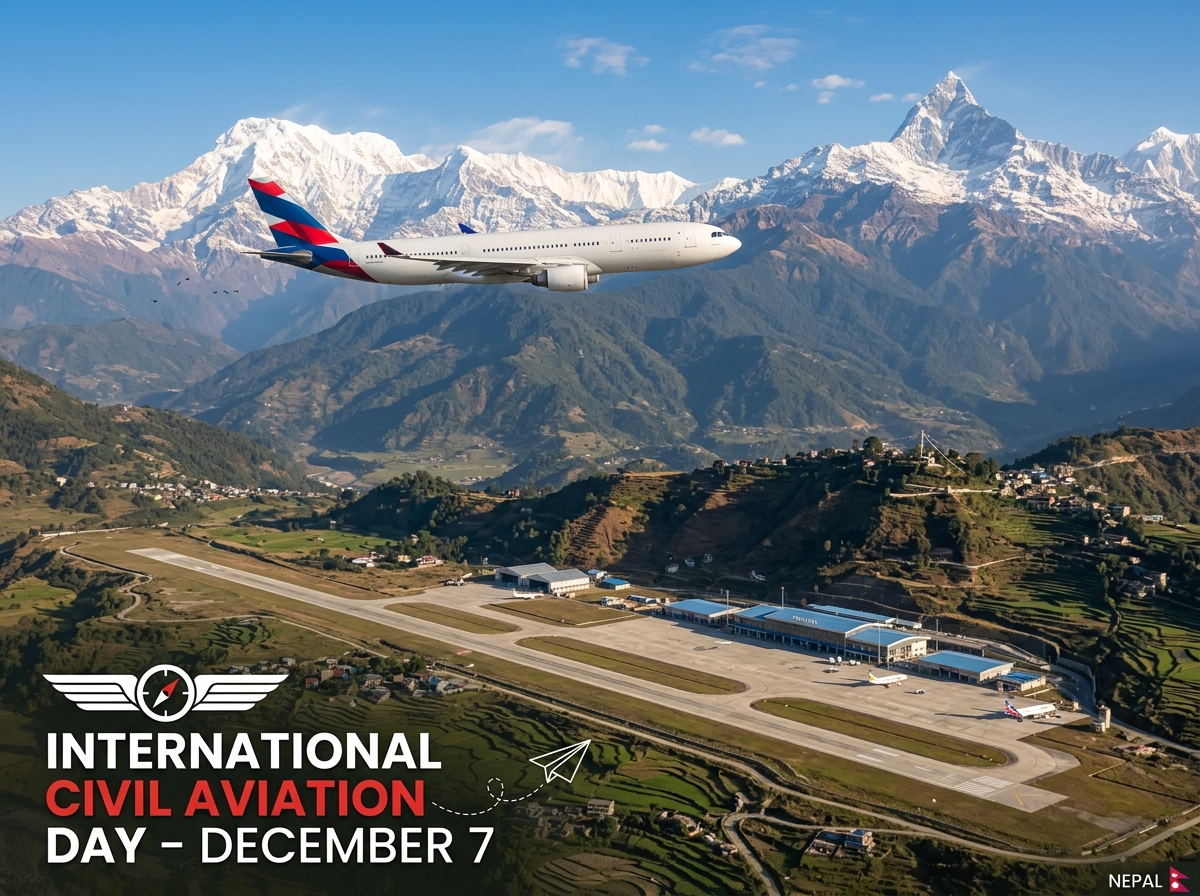
International Civil Aviation Day celebrates the role of civil aviation in connecting the world and supporting international development. It also highlights the importance of safe, secure, and sustainable air transport.
When Is International Civil Aviation Day 2026?
International Civil Aviation Day is observed every year on December 7. In 2026, it falls on Monday, December 7.
The United Nations officially recognized the day in 1996, following a proposal by the International Civil Aviation Organization (ICAO). The celebration highlights the contribution of international civil aviation to the social and economic development of countries worldwide.
History of International Civil Aviation Day
The history of modern international aviation goes back to December 7, 1944, when representatives from 52 countries signed the Convention on International Civil Aviation in Chicago, United States.
This agreement, commonly known as the Chicago Convention, established the foundation for international cooperation in civil aviation. It also led to the creation of the International Civil Aviation Organization, a specialized agency of the United Nations.
In 1994, ICAO began observing the day to mark its 50th anniversary. Two years later, in 1996, the United Nations General Assembly officially recognized December 7 as International Civil Aviation Day.
Why Is International Civil Aviation Day Important?
International Civil Aviation Day reminds us that aviation is about much more than travelling by plane. It supports the global economy and helps people stay connected.
1. Connects Countries and Cultures
Air travel allows people to visit family, explore new destinations, study abroad, and experience different cultures. It also helps countries build stronger international relationships.
2. Supports Economic Growth
Airports, airlines, aircraft maintenance companies, and aviation service providers create jobs and support tourism, trade, and business activities.
3. Promotes Aviation Safety
International aviation standards help airlines and countries maintain safe and reliable air travel. Cooperation among aviation authorities is essential for reducing risks and improving flight operations.
4. Helps During Emergencies
Aircraft play an important role in transporting emergency supplies, medical equipment, relief workers, and essential goods during natural disasters and humanitarian crises.
5. Encourages Sustainable Aviation
The aviation industry is working to reduce its environmental impact through improved aircraft technology, more efficient flight operations, sustainable aviation fuels, and other innovations.
International Civil Aviation Day and Nepal
Civil aviation has special importance for Nepal because of its mountains, tourism industry, and challenging geography. For many remote communities, air transport can provide an essential connection to larger cities and healthcare services.
Tribhuvan International Airport in Kathmandu serves as a major international gateway, connecting Nepal with destinations across Asia and beyond. Airports in tourist regions also support visitors travelling to destinations such as Lukla, Pokhara, and other parts of the country.
Aviation contributes to Nepal in several ways:
- Tourism: Helps international visitors reach Nepal for trekking, mountaineering, and cultural experiences.
- Employment: Supports jobs in airlines, airports, tourism, maintenance, and related services.
- Emergency services: Helps transport patients, rescue teams, and relief supplies when roads are difficult to access.
- International connectivity: Makes it easier for Nepalis to travel for education, employment, business, and family visits.
At the same time, Nepal faces aviation challenges, including difficult terrain, changing weather conditions, and the need for strong safety oversight and airport infrastructure. Continued investment in training, technology, maintenance, and safety systems is essential for the future of aviation in Nepal.
The Future of Civil Aviation
The future of civil aviation will depend on innovation, safety, and environmental responsibility. Several developments are shaping the industry:
- Modern aircraft: Newer aircraft can improve fuel efficiency and reduce operating costs.
- Digital technology: Advanced navigation systems and digital tools help improve flight planning and airport operations.
- Sustainable fuels: Sustainable aviation fuel may help reduce lifecycle greenhouse gas emissions, depending on how it is produced.
- Better passenger services: Digital check-in, improved baggage tracking, and other technologies can make journeys more convenient.
These developments show how aviation continues to evolve while maintaining its core responsibility: connecting people safely.
How Is International Civil Aviation Day Celebrated?
ICAO, aviation authorities, airlines, airports, and educational institutions may mark the occasion through awareness campaigns, seminars, educational activities, and discussions about aviation safety and sustainability.
Students and aviation enthusiasts can also participate by learning about aircraft technology, exploring aviation careers, and understanding how international flight standards work.
Frequently Asked Questions (FAQs)
1. When is International Civil Aviation Day celebrated?
International Civil Aviation Day is celebrated every year on December 7. In 2026, it falls on Monday.
2. Why do we celebrate International Civil Aviation Day?
The day recognizes the importance of international civil aviation in connecting countries, supporting economic development, improving mobility, and promoting safe and sustainable air transport.
3. Which organization is responsible for International Civil Aviation Day?
The International Civil Aviation Organization (ICAO), a specialized agency of the United Nations, plays the central role in promoting the day and international cooperation in civil aviation.
Conclusion
International Civil Aviation Day reminds us how aviation brings the world closer together. From supporting international tourism to delivering emergency supplies, civil aviation plays an important role in modern life.
For Nepal, safe and reliable air transport is particularly valuable because of the country’s geography and tourism potential. By investing in safety, skilled professionals, modern infrastructure, and sustainable technologies, Nepal can strengthen its aviation sector for future generations.
What role do you think aviation will play in Nepal’s future? Share your thoughts in the comments, and share this article with others who are interested in aviation and technology.


