


Introduction
Menstruation is a natural part of life, yet millions of people still face embarrassment, discrimination, and barriers to proper menstrual hygiene. In many communities, periods remain a topic people avoid discussing openly.
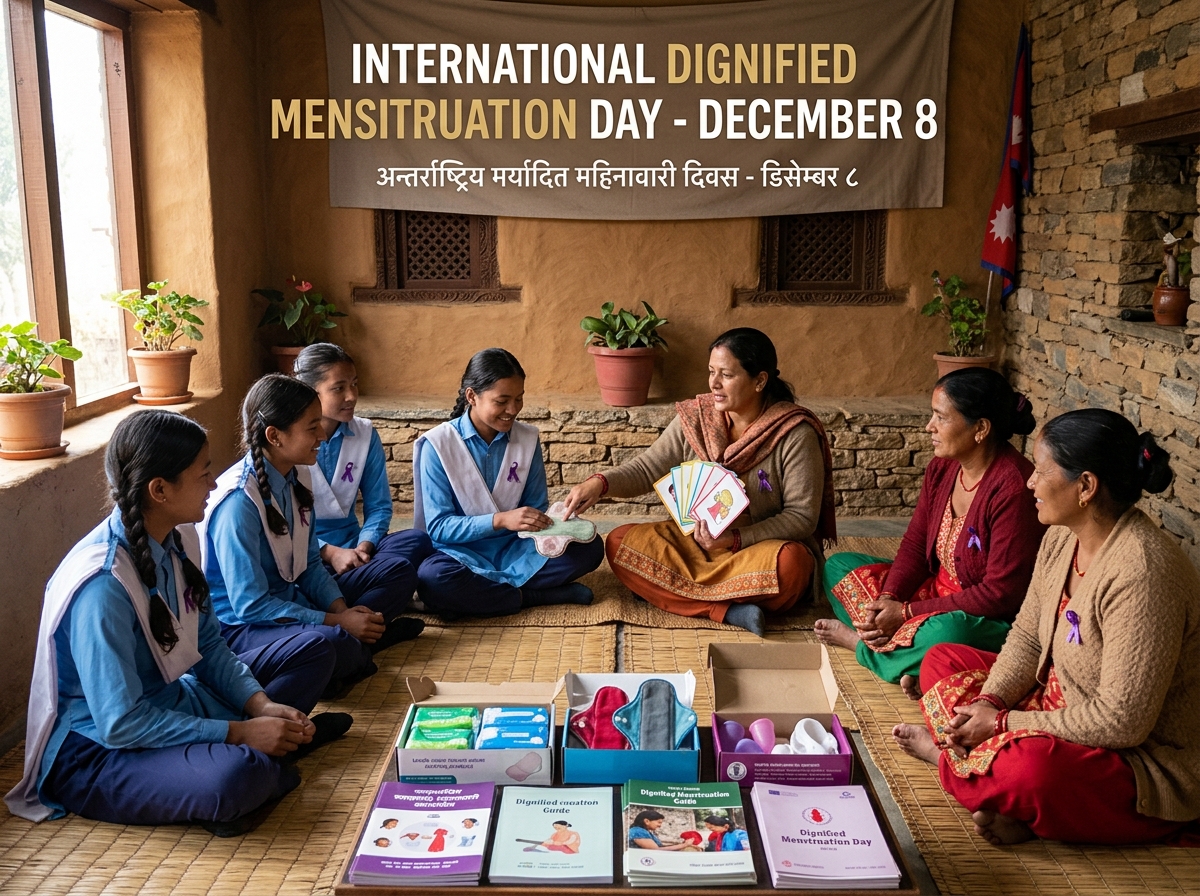
International Dignified Menstruation Day highlights the importance of menstrual health, dignity, equality, and human rights. It encourages individuals, families, schools, and governments to create a society where nobody feels ashamed of menstruating.
In Nepal, where traditional beliefs and menstrual restrictions still affect some communities, this day offers an opportunity to raise awareness and promote positive change.
What Is International Dignified Menstruation Day?
International Dignified Menstruation Day is observed on December 8 to promote dignity during menstruation and challenge the stigma and discrimination associated with periods.
The day emphasizes that menstruation is not dirty or shameful. Every menstruating person deserves access to safe menstrual products, clean toilets, water, privacy, accurate information, and respectful treatment.
Dignified menstruation also means being free from harmful restrictions and having the freedom to participate in education, work, family life, and community activities during periods.
Why Is International Dignified Menstruation Day Important?
1. Ending menstrual stigma
In some families and communities, people are discouraged from discussing menstruation. This silence can lead to misinformation, fear, and unnecessary shame.
Open conversations at home and in schools can help young people understand menstruation as a normal biological process.
2. Promoting menstrual hygiene
Good menstrual hygiene helps people manage periods safely and comfortably. Access to clean water, private toilets, suitable menstrual products, and proper waste disposal is essential.
Schools, workplaces, and public institutions should provide facilities that allow everyone to manage menstruation with dignity.
3. Protecting education and equality
A lack of menstrual products, private toilets, or reliable information can make it difficult for students to attend school comfortably.
Providing menstrual supplies, supportive teachers, and clean sanitation facilities helps students participate in education without unnecessary barriers.
4. Challenging harmful discrimination
Menstruation should never be a reason to exclude someone from daily life, education, employment, or social activities. Respect and informed choices should replace shame and discrimination.
Menstruation and Traditional Practices in Nepal
In Nepal, menstruation is connected with different cultural beliefs and traditions. One widely discussed practice is Chhaupadi, in which menstruating women and girls may be isolated from their homes or restricted from everyday activities.
Although practices differ across communities, harmful menstrual restrictions can affect physical safety, emotional well-being, and access to education.
Nepal has legally prohibited Chhaupadi, but awareness and implementation remain important. Families, teachers, community leaders, and local governments can help challenge harmful practices while treating cultural communities with respect.
International Dignified Menstruation Day reminds us that cultural traditions should not compromise a person’s safety, dignity, or basic rights.
How Can We Promote Dignified Menstruation?
Everyone can contribute to a more supportive society through simple but meaningful actions.
- Talk openly: Discuss menstruation without shame or insulting language.
- Educate young people: Teach boys and girls about menstrual health before misconceptions develop.
- Improve access: Support affordable menstrual products and clean sanitation facilities.
- Support schools: Encourage schools to provide private toilets, water, and menstrual hygiene education.
- Respect individual choices: Never force someone into isolation or impose harmful restrictions during menstruation.
- Spread awareness: Share reliable information through social media, community events, and educational programmes.
Small actions can make a real difference when families, schools, communities, and policymakers work together.
The Role of Men and Boys in Menstrual Awareness
Menstrual health is not only a women’s issue. Men and boys can play an important role in ending stigma by learning about menstruation and supporting their family members, friends, and classmates.
Fathers can speak comfortably with their children about puberty. Teachers can provide accurate information to all students, and employers can help ensure suitable workplace facilities.
When everyone participates, menstruation becomes a normal health topic rather than a source of embarrassment.
Frequently Asked Questions (FAQs)
1. When is International Dignified Menstruation Day observed?
International Dignified Menstruation Day is observed on December 8 each year to promote menstrual dignity, equality, and awareness.
2. Why is dignified menstruation important in Nepal?
It helps address menstrual stigma, harmful restrictions, inadequate sanitation, and barriers to education. It also promotes safe, respectful menstrual health practices.
3. How can I participate in International Dignified Menstruation Day?
You can share reliable educational information, support menstrual hygiene initiatives, encourage open conversations, and challenge discriminatory practices in your community.
Conclusion
International Dignified Menstruation Day is a reminder that menstruation is natural and should never be a reason for shame, discrimination, or exclusion.
By improving menstrual education, ensuring access to hygiene facilities, and challenging harmful restrictions, we can help build a healthier and more equal society in Nepal and around the world.
What do you think communities and schools should do to improve menstrual awareness? Share your thoughts in the comments, and share this article to help spread awareness.


