
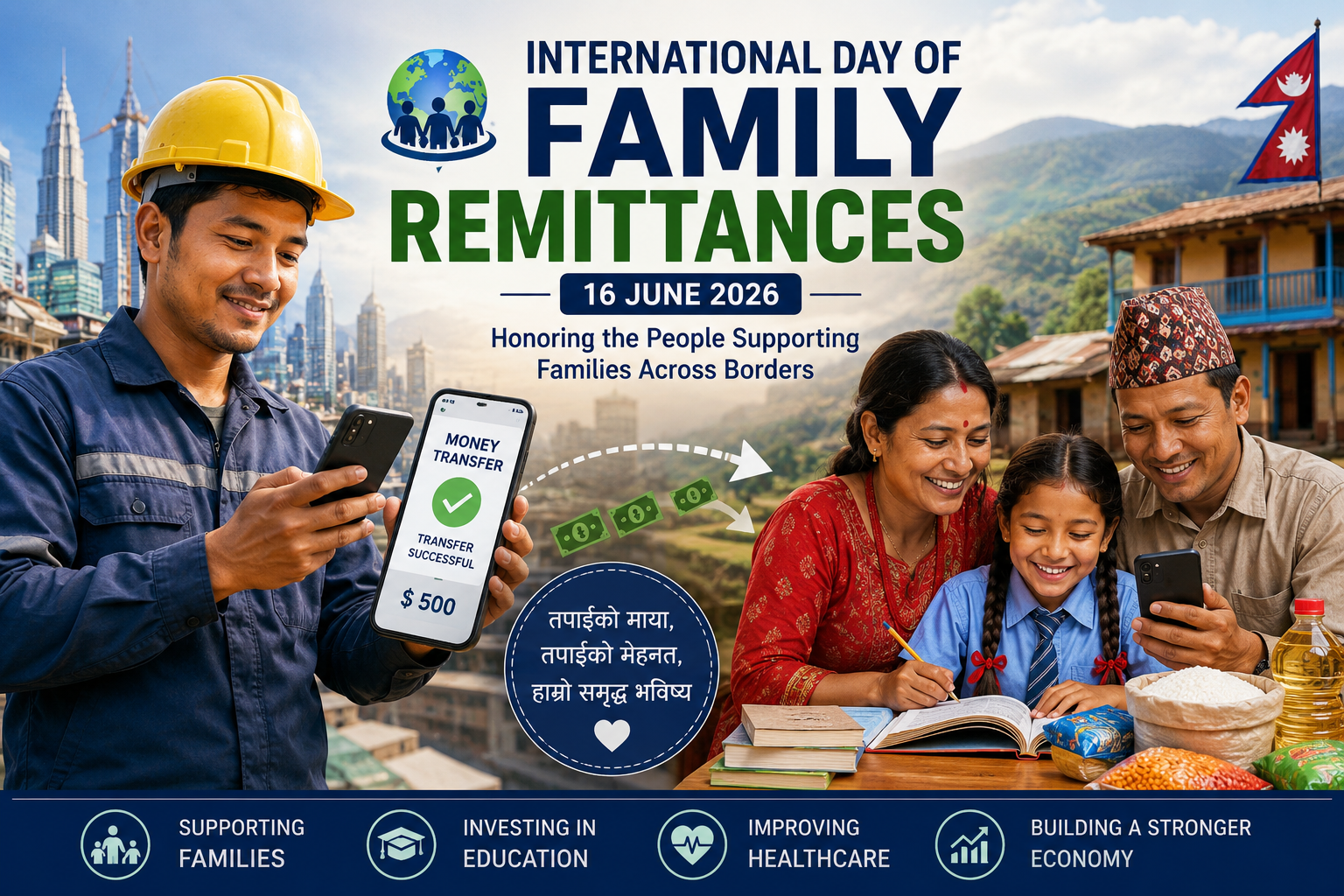
International Day of Family Remittances: Celebrating the Lifeline of Families Worldwide
Every year on June 16, the world observes the International Day of Family Remittances (IDFR). This special day recognizes the hard work, sacrifices, and contributions of millions of migrant workers who send money back home to support their families.
For countries like Nepal, remittances are more than just financial transactions. They help families pay for education, healthcare, housing, and daily living expenses. They also play a significant role in strengthening the national economy.
What is the International Day of Family Remittances?
The International Day of Family Remittances was officially adopted by the United Nations to honor the dedication of migrant workers worldwide. These workers leave their homes and families in search of better opportunities and send part of their earnings back to their loved ones.
The day highlights the positive impact of remittances on:
- Poverty reduction
- Education access
- Healthcare services
- Economic growth
- Community development
Why Remittances Matter for Nepal
Nepal is one of the countries that heavily benefits from remittances. Millions of Nepali citizens work abroad in countries such as:
- Qatar
- Saudi Arabia
- United Arab Emirates (UAE)
- Malaysia
- South Korea
- Japan
The money they send home supports families across urban and rural areas.
Key Benefits of Remittances
1. Improved Living Standards
Many households rely on remittance income to meet basic needs such as food, clothing, and shelter.
2. Better Education
Parents use remittance funds to pay school and college fees, helping children build a brighter future.
3. Access to Healthcare
Families can afford medical treatments, health insurance, and emergency care thanks to financial support from abroad.
4. Economic Growth
Remittances contribute significantly to Nepal’s economy by increasing household spending and supporting local businesses.
The Global Impact of Family Remittances
According to global development organizations, migrant workers send hundreds of billions of dollars to low- and middle-income countries every year. These funds often exceed foreign aid and provide direct support to families in need.
Remittances help communities:
- Build homes
- Start small businesses
- Invest in agriculture
- Create employment opportunities
- Improve financial inclusion
Challenges Faced by Migrant Workers
While remittances bring many benefits, migrant workers often face significant challenges.
Some common issues include:
- Separation from family
- Language barriers
- Difficult working conditions
- High remittance transfer fees
- Limited access to financial services
Recognizing these challenges is an important part of honoring their contributions on the International Day of Family Remittances.
How Families Can Make Better Use of Remittances
Financial experts recommend that families use remittance income wisely to create long-term benefits.
Smart Ways to Use Remittances
- Invest in education and skills training.
- Save money for emergencies.
- Purchase health insurance.
- Start a small business.
- Invest in agriculture or productive assets.
Proper financial planning can help families become more secure and self-reliant in the future.
How Nepal Can Maximize the Benefits of Remittances
To maximize the impact of remittances, policymakers and financial institutions can:
- Promote digital banking services.
- Reduce money transfer costs.
- Encourage financial literacy.
- Support entrepreneurship programs.
- Create investment opportunities for migrant families.
These measures can help transform remittance income into sustainable economic development.
Frequently Asked Questions (FAQs)
1. When is the International Day of Family Remittances celebrated?
The International Day of Family Remittances is observed every year on June 16.
2. Why are remittances important for Nepal?
Remittances support millions of Nepali families by helping cover education, healthcare, housing, and daily expenses while contributing significantly to the national economy.
3. Who sends remittances?
Migrant workers living and working abroad send money to their families and communities in their home countries.
Conclusion
The International Day of Family Remittances is a reminder of the dedication and sacrifices made by migrant workers around the world. Their hard-earned income not only supports their families but also contributes to the economic development of entire nations.
For Nepal, remittances remain a vital source of income and opportunity. As we celebrate this day, let us appreciate the countless migrant workers whose efforts help build stronger families and brighter futures.
What are your thoughts on the role of remittances in Nepal? Share your views in the comments below, and don’t forget to share this article with your friends and family. Subscribe for more informative content on Nepal, technology, education, and current affairs.