


Introduction
A simple habit like washing your hands can protect you and your family from many illnesses. Yet, people often forget to wash their hands at important moments, such as before eating or after using the toilet.
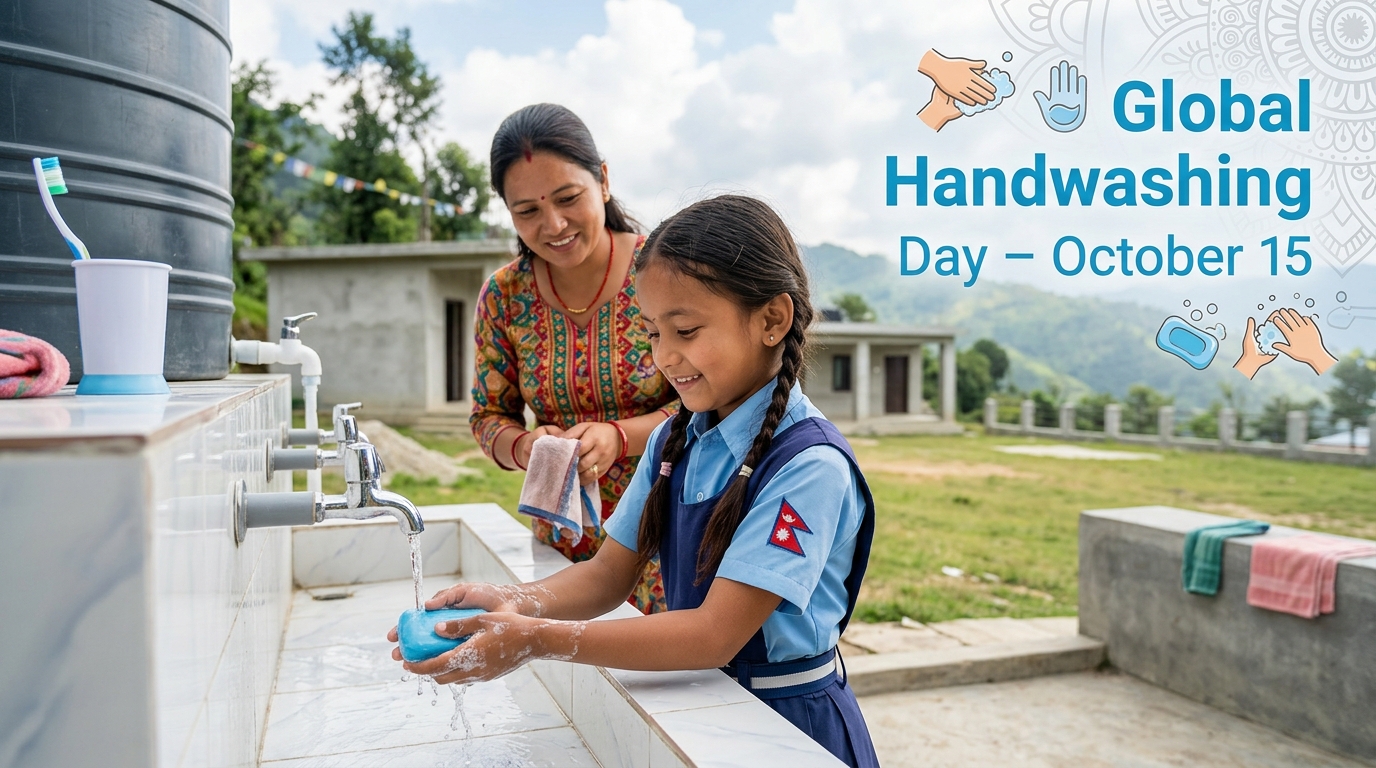
Global Handwashing Day reminds people around the world that clean hands are essential for a healthy life. Observed every year on October 15, this global awareness day encourages individuals, families, schools, and communities to make handwashing with soap a regular habit.
In Nepal, where access to clean water and sanitation facilities can vary between communities, promoting proper hand hygiene is especially important.
What Is Global Handwashing Day?
Global Handwashing Day is an international awareness day established in 2008 to promote handwashing with soap as an easy, affordable, and effective way to prevent diseases.
The day encourages people to understand that handwashing is not just a personal habit. It is also an important public health practice that helps protect entire communities.
Every year, organizations, schools, health workers, and local communities use this occasion to spread awareness about the importance of hand hygiene.
When Is Global Handwashing Day Celebrated?
Global Handwashing Day is celebrated every year on October 15.
The day highlights the importance of making handwashing facilities and soap available to everyone. It also encourages governments, schools, businesses, and families to support better hygiene practices.
Why Is Global Handwashing Day Important?
Our hands touch many surfaces throughout the day, including mobile phones, door handles, money, desks, and public transport equipment. These surfaces may carry germs that can enter our bodies when we touch our eyes, nose, or mouth or handle food with unclean hands.
Proper handwashing with soap helps remove germs and reduce the spread of infections.
The main benefits include:
- Prevents diarrhoeal diseases: Handwashing helps reduce the spread of germs that cause diarrhoea.
- Reduces respiratory infections: Clean hands can lower the risk of spreading certain respiratory illnesses.
- Improves food safety: Washing hands before preparing or eating food helps prevent contamination.
- Protects children: Good hygiene habits help children stay healthier at home and school.
- Builds healthier communities: Regular handwashing can reduce the spread of infectious diseases.
How to Wash Your Hands Properly
Knowing the correct handwashing technique is just as important as remembering to wash your hands.
Follow these simple steps:
- Wet your hands with clean running water.
- Apply soap and create a good lather.
- Rub your palms together to spread the soap.
- Clean the backs of both hands, including the areas between your fingers.
- Scrub under your fingernails and around your thumbs, where dirt and germs can collect.
- Continue rubbing for at least 20 seconds.
- Rinse your hands thoroughly with clean running water.
- Dry your hands using a clean towel or another hygienic method.
Remember, rinsing with water alone is generally less effective than washing with soap.
When Should You Wash Your Hands?
Make handwashing part of your daily routine, especially at these times:
- Before preparing food and before eating.
- After using the toilet.
- After changing a baby’s diaper or helping a child use the toilet.
- After coughing, sneezing, or blowing your nose.
- After touching garbage or cleaning dirty surfaces.
- After handling animals or their waste.
- When your hands look or feel dirty.
- Before and after caring for someone who is sick.
These small actions can make a meaningful difference in protecting your health.
Global Handwashing Day in Nepal
In Nepal, hand hygiene awareness is important in homes, schools, health facilities, restaurants, and public places. Communities can help promote healthier habits by making soap and clean water available wherever possible.
Schools can organize handwashing demonstrations, poster competitions, and short awareness programmes. Parents can teach children to wash their hands before meals and after using the toilet.
Local communities can also encourage households to maintain convenient handwashing stations near toilets and cooking areas.
However, awareness alone is not enough. Reliable access to water, soap, and hygienic sanitation facilities is essential to make regular handwashing possible for everyone.
How Can You Celebrate Global Handwashing Day?
You do not need to organize a large event to participate. You can celebrate Global Handwashing Day in simple and useful ways.
- Teach children the correct handwashing technique.
- Share hand hygiene information with friends and family.
- Organize a short awareness session at your school or workplace.
- Put a handwashing reminder near your kitchen or bathroom.
- Check whether soap and water are available at home.
- Encourage your community to improve hygiene facilities.
Even one small action can inspire others to develop healthier habits.
Frequently Asked Questions (FAQs)
1. When is Global Handwashing Day celebrated?
Global Handwashing Day is observed every year on October 15 to promote handwashing with soap and raise awareness about its health benefits.
2. Why is handwashing with soap important?
Handwashing with soap removes dirt and many disease-causing germs from your hands. It helps reduce the spread of diarrhoeal diseases and respiratory infections.
3. How long should you wash your hands?
Scrub your hands with soap for at least 20 seconds, making sure to clean between your fingers, the backs of your hands, your thumbs, and under your nails.
Conclusion
Global Handwashing Day reminds us that protecting our health can begin with one simple habit. Washing our hands with soap at the right times helps prevent infections, supports food safety, and protects our families and communities.
This October 15, make hand hygiene a priority and encourage others to do the same. Healthy habits start with small steps, and clean hands are one of the easiest places to begin.
Did you know how important proper handwashing is? Share your thoughts in the comments, send this article to your friends and family, and follow our website for more health awareness articles.


