


Introduction
Communication is an essential part of human life. We use words, gestures, expressions, and signs to share our thoughts and feelings. However, for millions of deaf and hard-of-hearing people, sign language is much more than a way to communicate. It is an important part of their identity, culture, and community.
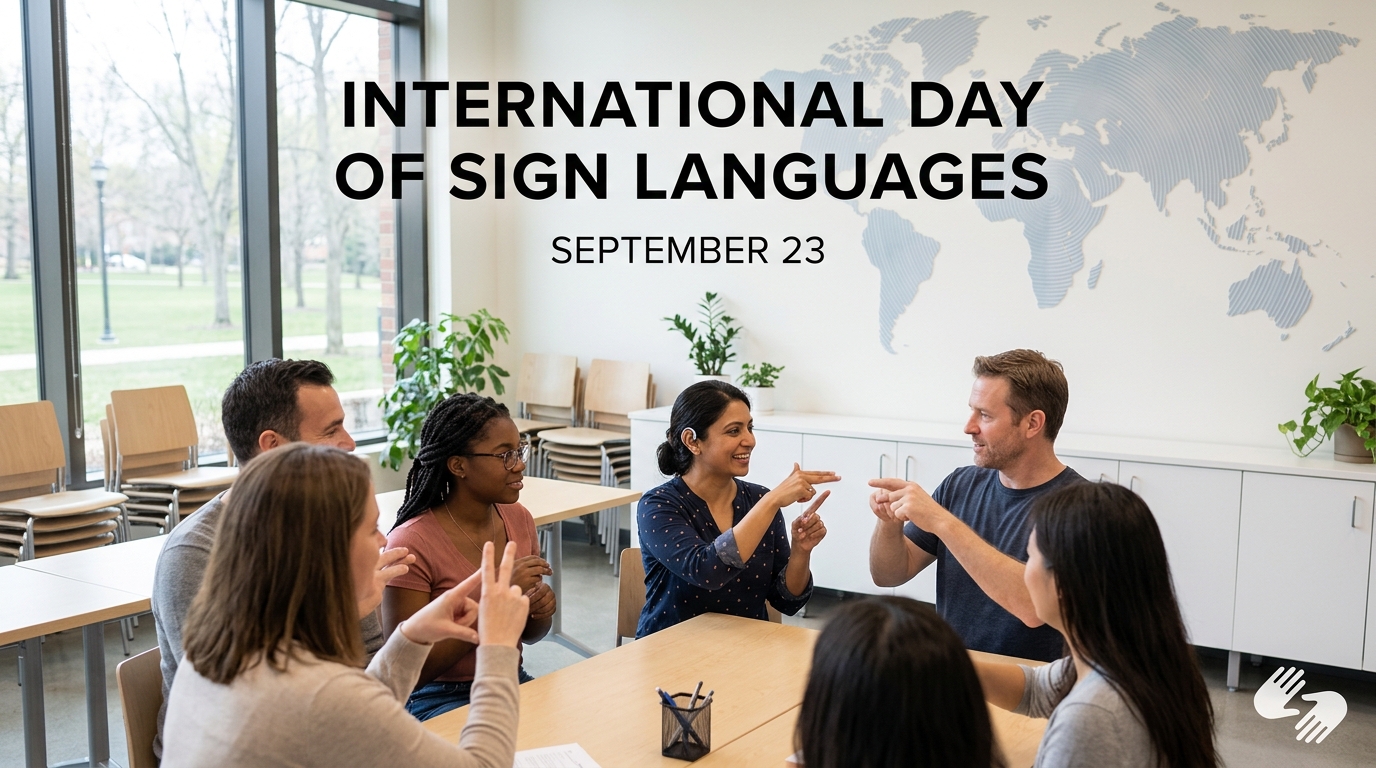
The International Day of Sign Languages is observed every year on September 23 to raise awareness about the importance of sign languages and promote the rights of deaf people around the world.
This day reminds us that everyone deserves equal opportunities to learn, work, participate in society, and express themselves without communication barriers.
When Is International Day of Sign Languages Celebrated?
The International Day of Sign Languages is celebrated annually on September 23. In 2026, it falls on Wednesday, September 23.
The United Nations established this international observance to support the linguistic identity and cultural diversity of deaf people and encourage the recognition of sign languages worldwide.
The date marks the establishment of the World Federation of the Deaf in 1951, an organization that works to protect the human rights of deaf people.
History of International Day of Sign Languages
The United Nations General Assembly proclaimed September 23 as the International Day of Sign Languages in December 2017. The first official celebration took place in 2018.
The observance recognizes the importance of sign languages in achieving the Sustainable Development Goals and ensuring that no one is left behind.
According to the World Federation of the Deaf, there are more than 70 million deaf people worldwide, and over 300 different sign languages are used globally.
Sign languages are complete natural languages with their own grammar and structure. They are not simply gestures or word-for-word translations of spoken languages.
Why Is International Day of Sign Languages Important?
1. Promotes Equal Communication
Sign languages allow deaf people to communicate comfortably and express their ideas, emotions, and experiences. Recognizing these languages helps reduce communication barriers in everyday life.
2. Protects Deaf Culture and Identity
Sign languages connect people through shared experiences, traditions, and cultural identity. Promoting them helps preserve linguistic diversity and encourages respect for different communities.
3. Supports Inclusive Education
Deaf children deserve access to quality education in a language they can understand. Schools can become more inclusive by providing sign-language instruction, qualified interpreters, and accessible learning materials.
4. Encourages Equal Employment Opportunities
Communication barriers can prevent deaf people from accessing jobs and career opportunities. Employers can support inclusion by providing interpreters, accessible meetings, and suitable workplace communication tools.
5. Raises Awareness About Deaf Rights
This day encourages governments, schools, businesses, and communities to recognize the rights of deaf people and remove barriers that limit their participation in society.
Sign Language in Nepal and India
Sign Language in Nepal
In Nepal, sign language plays an important role in the lives of deaf people. Nepalese Sign Language is used by members of the deaf community, although access to sign-language education and interpretation services can vary by location.
Schools, public institutions, healthcare facilities, and workplaces can help create a more inclusive society by improving communication access.
Nepal can further support deaf communities through interpreter training, accessible public information, inclusive education, and greater public awareness of Nepalese Sign Language.
Sign Language in India
India also has a large deaf community. Indian Sign Language (ISL) is an important communication language for many deaf people across the country.
The Indian government established the Indian Sign Language Research and Training Centre to support sign-language research, training, and educational resources.
Expanding access to sign-language learning and interpretation can help deaf people participate more fully in education, employment, healthcare, and public life.
How Can We Celebrate International Day of Sign Languages?
Everyone can contribute to making communication more accessible. Here are some simple ways to observe the day:
- Learn basic signs: Start with greetings, introductions, numbers, and everyday expressions.
- Share awareness: Publish informative posts about sign languages and deaf rights on social media.
- Support deaf creators: Watch, share, and engage with content created by deaf people.
- Promote inclusive education: Encourage schools to provide accessible learning opportunities.
- Improve public accessibility: Support sign-language interpretation at public events and important announcements.
- Respect deaf culture: Ask about communication preferences instead of making assumptions.
- Challenge discrimination: Speak up when deaf people face unfair treatment or exclusion.
Even learning a few basic signs can be a meaningful first step toward more inclusive communication.
International Day of Sign Languages 2026 Theme
The official theme for the International Day of Sign Languages can vary each year. For the 2026 observance, readers should check the United Nations and World Federation of the Deaf websites for the confirmed theme and official campaign details.
Avoid using an unverified theme in promotional materials or blog headlines.
Frequently Asked Questions (FAQs)
1. When is International Day of Sign Languages celebrated?
It is celebrated every year on September 23. In 2026, the day falls on Wednesday, September 23.
2. Why do we celebrate International Day of Sign Languages?
The day raises awareness about sign languages, promotes deaf people’s human rights, and encourages equal access to communication, education, employment, and public services.
3. Is sign language the same throughout the world?
No. Different countries and communities use different sign languages, each with its own vocabulary and grammar. For example, Nepalese Sign Language and Indian Sign Language are distinct languages.
Conclusion
The International Day of Sign Languages reminds us that communication should be accessible to everyone. Sign languages are valuable languages that support education, cultural identity, social participation, and human rights.
Whether in Nepal, India, or another part of the world, we can all help create a more inclusive society by learning about sign languages, respecting deaf culture, and supporting equal opportunities.
What do you think schools and communities can do to make communication more accessible for deaf people? Share your thoughts in the comments, share this article with others, and follow our website for more informative articles about international days and social awareness.


